Pappedeckel: Meaning, Uses, History, SEO, and Modern Importance
Pappedeckel is a German word that may look unfamiliar to many English-speaking readers, but its meaning is connected to a simple and familiar material: cardboard. Depending on the region and context, Pappedeckel can describe cardboard, a piece of cardboard, a cardboard cover, or a similar paper-based object. The word is also related to forms such as Pappdeckel and Pappendeckel, which can appear in German dictionaries and regional language sources.
Understanding Pappedeckel requires more than giving a single English translation. German regional vocabulary can change from one area to another, and the same word may have different meanings in everyday speech. In addition, modern websites sometimes use Pappedeckel in discussions about packaging, cardboard products, sustainability, and SEO. This has created additional interest around the keyword.
In this guide, we will explore what Pappedeckel means, where the word comes from, how it differs from related German terms, how it connects with cardboard and packaging, and why the term appears in modern online searches. The goal is to provide a simple, clear, and useful explanation for readers who have encountered Pappedeckel and want to understand its meaning and wider context.
What Is Pappedeckel?
Pappedeckel is a German word that can look confusing to English-speaking readers because it does not have one perfect English translation. In its most direct sense, Pappedeckel belongs to the German word family built around cardboard, paperboard, and a cover or lid.
The word is closely related to the more standard German forms “Pappdeckel” and “Pappendeckel.” German dictionary references describe Pappdeckel as a piece of Pappe or cardboard, often a rectangular piece used as a cover or protective layer.
The word can be understood by separating it into two parts:
- Pappe means cardboard, pasteboard, or a thick paper-based material.
- Deckel means lid, cover, or top.
Together, the basic idea is a cardboard cover, cardboard piece, or cardboard lid.
However, Pappedeckel is more interesting than a simple dictionary translation. The exact meaning can change according to region and context. In parts of German-speaking Europe, related forms can refer to cardboard or a piece of stiff paperboard. In some regional speech, the word can also have figurative meanings. A Rhineland dialect dictionary, for example, records Pappedeckel as a colloquial expression for cardboard or inferior material.
For a US audience, the easiest way to understand Pappedeckel is to think about the everyday things that are made from thick paper-based material: cardboard covers, book boards, packaging pieces, protective sheets, box components, and similar products.
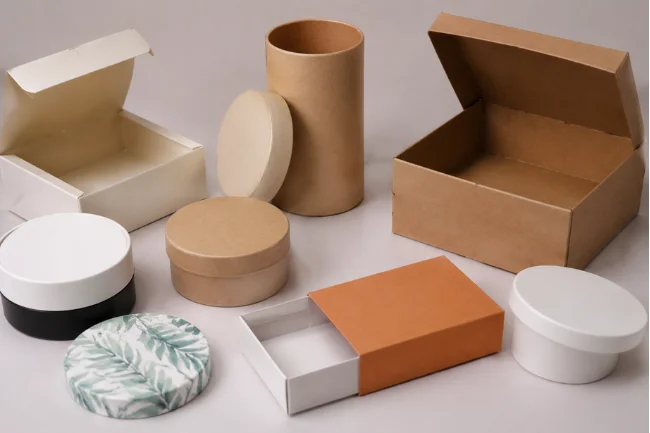
One important point should be made clear at the beginning: Pappedeckel is not, by itself, an SEO technique. Some websites use the phrase “Pappedeckel SEO” to describe SEO for a packaging-related business, but that is a modern online usage rather than the literal meaning of the German word.
Also read:Blazertje: Meaning, Style, History, Types, and How to Wear It
This distinction matters because someone searching for Pappedeckel may be looking for a German word definition, a translation, a cardboard product, a regional expression, or information connected with packaging.
Pappedeckel Meaning in Simple English
The simplest explanation is:
Pappedeckel is a German regional or colloquial form related to Pappdeckel and Pappendeckel, referring mainly to cardboard, a piece of cardboard, or a cardboard cover.
The exact English translation depends on the sentence.
Possible translations include:
- cardboard
- piece of cardboard
- cardboard cover
- cardboard lid
- paperboard cover
- pasteboard
- stiff cardboard
- cardboard sheet
It is not always correct to translate Pappedeckel as “cardboard lid.” That translation can be useful when the context clearly describes a lid, but dictionary and dialect sources show that the word can have a wider meaning.
This is one of the most important details for anyone researching the word online. A good translation should follow the context rather than forcing one English word into every situation.
For example, if a German speaker is talking about a rectangular piece of cardboard placed under an object, “piece of cardboard” may be the most natural translation.
If the same word appears in a packaging discussion about a box, “cardboard cover” or “cardboard lid” could be more appropriate.
If it appears in a regional German conversation, the meaning could be broader or even figurative.
Where Does the Word Pappedeckel Come From?
Pappedeckel belongs to a family of German compound words.
German is well known for combining smaller words to create longer words with a specific meaning. Pappedeckel follows this basic pattern.
The first part, Pappe, refers to cardboard or a thick paper-based material.
The second part, Deckel, generally means a lid or cover.
This gives the word a practical structure. Instead of describing an object with several separate words, German can combine the concepts into one noun.
The related form Pappdeckel is documented as a German word for a piece of cardboard or carton, while Pappendeckel is another recognized form.
The spelling Pappedeckel can therefore be understood as part of a broader regional and linguistic family rather than as an entirely unrelated word.
This also explains why people may find several different versions when searching online.
Pappedeckel, Pappdeckel, and Pappendeckel
One of the biggest sources of confusion is the spelling.
You may encounter:
- Pappedeckel
- Pappdeckel
- Pappendeckel
- Pabbedeggel
- Babbedeckel
- Babbadeckel
- Babbadeggl
These forms do not necessarily represent completely different concepts. Many are connected through regional pronunciation, dialect, spelling traditions, or standard-language forms.
The form Pappdeckel is particularly important because German reference material defines it as a piece of Pappe or cardboard. Pappendeckel is listed as a related form.
In southwestern German dialects, Pappedeckel and related forms can be found as regional vocabulary. An Alemannic language reference lists Pabbedeggel and Pappedeckel with the meaning Karton, or cardboard/carton, and notes that in some areas the word can also have another regional meaning connected with a driver’s license.
This shows why spelling alone should not be used to determine meaning.
A person searching for Pappedeckel may actually have encountered Pappdeckel or Pappendeckel in another source.
Is Pappedeckel a Standard German Word?
The answer requires some care.
Pappedeckel exists as a regional or colloquial form, but Pappdeckel and Pappendeckel are more useful reference forms when looking at standard German vocabulary.
That does not make Pappedeckel meaningless or “wrong.” Languages naturally contain regional words and informal forms that may not appear as the primary entry in every standard dictionary.
This is especially common in German because Germany, Austria, Switzerland, and neighboring German-speaking areas have many dialects.
A word can therefore be perfectly normal in one region while sounding unusual to someone from another part of the German-speaking world.
For SEO writers and translators, this is an important lesson: search behavior does not always follow dictionary behavior.
People often search for the exact spelling they heard or saw. Even if a more standard spelling exists, the searched form can have a real linguistic history.
Regional Meaning of Pappedeckel
Regional language is one of the most fascinating parts of Pappedeckel.
German dialects vary greatly. The same basic object can have different names depending on where the speaker lives.
Alemannic sources document Pappedeckel and related forms in southwestern German-speaking regions. The same source explains that the term can mean cardboard and, in certain places, can also be associated with a driver’s license.
The Rhineland provides another example. The regional dictionary of the Landschaftsverband Rheinland records “Pappedeckel” in everyday Rhineland speech with a meaning connected to cardboard and low-quality material.
These regional meanings demonstrate something important about language: words are shaped by communities.
A word may begin with a physical object and later develop additional meanings through humor, comparison, local culture, or everyday speech.
That is why a complete Pappedeckel guide should not treat the word as only a packaging term.
Pappedeckel as Cardboard
The most practical interpretation of Pappedeckel is connected with cardboard or paperboard.
Cardboard is a paper-based material made by combining and pressing fibers into sheets. Different manufacturing methods produce materials with very different levels of thickness, stiffness, strength, smoothness, and moisture resistance.
Not every cardboard material is the same.
A thin folding carton behaves differently from thick bookbinding board. Corrugated board behaves differently from solid paperboard. Coated food packaging behaves differently from untreated craft board.
When Pappedeckel is used in a material-related context, the specific type of cardboard should therefore be determined from the surrounding information.
This distinction is especially important for businesses that sell packaging products.
Calling every paper-based cover “cardboard” may be understandable in everyday speech, but professional packaging decisions require more precise specifications.
Pappedeckel in Packaging
Cardboard covers and related paperboard components are widely useful in packaging.
A packaging component can serve several purposes at the same time.
It may:
- protect the product
- keep pieces together
- cover an opening
- separate products
- improve presentation
- reduce movement inside a box
- provide space for printing
- support stacking
- make handling easier
The advantage of paperboard is that it can be designed in many shapes and thicknesses.
For example, a packaging company might use a stiff paperboard panel as an internal separator while using a lighter folding carton for the outer package.
This means the concept behind Pappedeckel is broader than one particular product.
It represents an entire category of practical paper-based components.
Pappedeckel and Bookbinding
One of the less obvious areas connected with thick cardboard is bookbinding.
Hardcover books often use rigid boards underneath their outer covering. These boards provide structure and protect the pages.
Bookbinding board needs to be:
- stiff
- dimensionally stable
- easy to cut
- suitable for covering
- strong enough for repeated handling
This is very different from the thin cardboard used for cereal packaging.
That difference illustrates why “cardboard” is a broad category rather than one specific material.
In craft and bookbinding communities, similar German terms may appear when people discuss board, pasteboard, bookbinding materials, or covers.
For a US reader, useful related terms include book board, binder’s board, gray board, chipboard, and paperboard.
However, these materials are not always exact equivalents. Their composition and intended use can vary.
Pappedeckel in Arts and Crafts
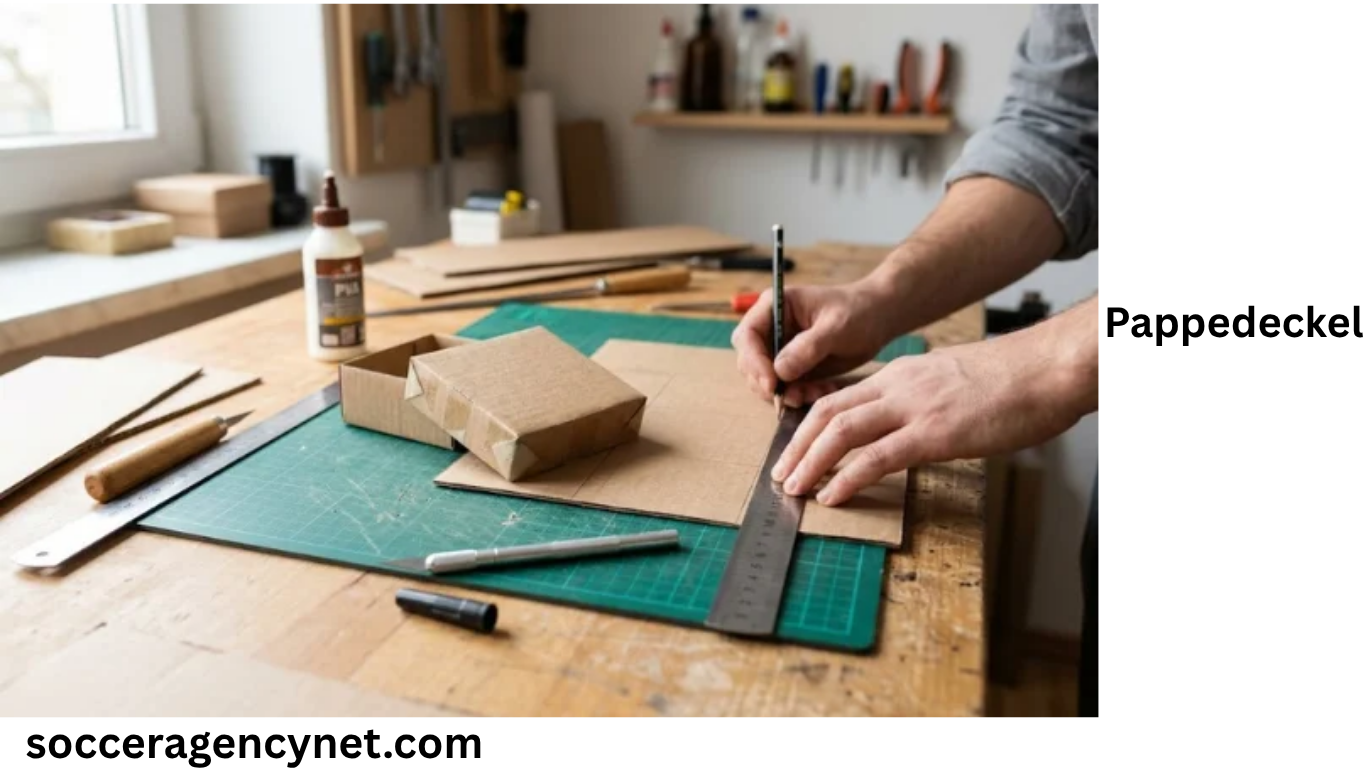
Cardboard is also an important material for creative work.
People use stiff paperboard for:
- model making
- school projects
- miniature buildings
- handmade boxes
- book covers
- signs
- templates
- decorative panels
- prototypes
- paper engineering
The appeal is simple: cardboard is relatively inexpensive, easy to cut, and widely available.
For beginners, it can also be a safer and easier material to experiment with than wood or plastic.
A simple cardboard prototype can help a designer test the size and shape of a product before investing in more expensive materials.
This is one reason cardboard remains useful even as manufacturing technology becomes more advanced.
Pappedeckel and Sustainable Packaging
The environmental discussion around cardboard deserves a balanced explanation.
Paper-based packaging can offer important environmental advantages, especially when it is responsibly sourced, efficiently produced, reused where practical, and correctly recycled.
But cardboard should not automatically be described as “green” in every situation.
Environmental performance depends on factors such as:
- fiber source
- recycled content
- manufacturing energy
- water use
- transportation
- coatings
- adhesives
- contamination
- product lifespan
- local recycling systems
A plain cardboard component may be easier to recycle than a heavily coated or mixed-material package.
This is why sustainability claims should be specific.
Instead of saying that every Pappedeckel is automatically environmentally friendly, a better statement is that paperboard can provide a recyclable or renewable-material option when its design and end-of-life system support that outcome.
That approach is more accurate and more trustworthy.
Is Pappedeckel Recyclable?
The answer depends on what the material contains and how it has been used.
Clean, ordinary cardboard and paperboard are commonly accepted in many recycling systems, but local rules differ.
Problems can occur when cardboard includes:
- heavy plastic coatings
- foil layers
- wax
- food contamination
- mixed materials
- adhesives that interfere with processing
For US consumers, the safest approach is to check the local recycling program instead of assuming that every cardboard product belongs in the recycling bin.
This is especially important for food packaging.
A clean cardboard package may be recyclable in a particular community, while a greasy or heavily contaminated item may need a different disposal method.
How Pappedeckel Is Made
The manufacturing process depends on the exact type of board being produced.
In broad terms, paperboard production begins with fibrous raw materials.
These may include virgin wood fibers, recycled paper fibers, or a combination of materials.
The fibers are processed into a pulp, formed into sheets, pressed, dried, and finished.
Manufacturers can then modify the board through processes such as:
- coating
- laminating
- cutting
- printing
- embossing
- folding
- die cutting
The final properties depend heavily on the manufacturing design.
A thick rigid board needs different processing from a lightweight folding carton.
This is why professional packaging specifications normally include more than the simple word “cardboard.”
Important Properties of a Cardboard Cover
When choosing a cardboard cover or similar Pappedeckel-type component, several characteristics matter.
Thickness
Thickness affects stiffness, weight, appearance, and performance.
A thicker board may provide more rigidity, but it also adds material and weight.
Stiffness
Stiffness determines how easily the board bends.
A package that needs structural support requires more stiffness than a simple disposable insert.
Surface Quality
The surface can affect printing, coating, writing, and appearance.
Smooth surfaces are often preferred for high-quality graphics.
Moisture Resistance
Untreated paperboard can absorb moisture.
For food, beverage, refrigerated, or humid applications, moisture resistance may become important.
Strength
Strength matters when the cardboard must withstand pressure, stacking, bending, or repeated handling.
Printability
Many packaging products also act as marketing surfaces.
A well-designed board can display logos, product information, instructions, warnings, and branding.
Why Cardboard Covers Are Useful
A cardboard cover can look simple, but its function can be surprisingly important.
The best packaging component performs its job without using more material than necessary.
For example, a cover may protect a product during transportation while also making the package easier to open.
A well-designed cardboard component can therefore combine protection, convenience, appearance, and material efficiency.
This is a major reason packaging designers continue to use paperboard even as new materials enter the market.
Pappedeckel in Everyday Life
Most people probably interact with cardboard products without knowing the German word.
Examples include:
- book covers
- food cartons
- shipping boxes
- product inserts
- protective sheets
- packaging dividers
- craft boards
- paperboard sleeves
- box covers
The object may never be called Pappedeckel in an American store, but the underlying material concept is familiar.
This is one of the reasons the word is interesting for English-speaking readers.
It gives a name to something that is already part of everyday life.
Pappedeckel and German Beer Culture
Another interesting use associated with cardboard in German-speaking culture is the beer coaster.
A cardboard coaster can serve practical purposes, including protecting a table from moisture.
In German beer culture, coasters can also have social and commercial functions. They may display brewery branding, serve as advertising surfaces, or be used to record drinks in traditional settings.
Some modern online sources strongly connect Pappedeckel with beer coasters, but this should not be treated as the universal dictionary meaning of the word. The broader German word family is associated with cardboard and cardboard pieces, while specific cultural meanings depend on regional context.
This distinction prevents a common SEO mistake: taking one interesting usage and presenting it as the only definition.
Pappedeckel and Food Packaging
Paperboard is widely used around food because it can be shaped, printed, folded, and manufactured at scale.
Common examples include:
- bakery boxes
- takeaway containers
- dry-food cartons
- cereal boxes
- confectionery packaging
- sleeves
- separators
Food-contact applications require careful material selection.
A board designed for dry goods is not automatically suitable for direct contact with wet or oily food.
Coatings, barriers, adhesives, inks, and manufacturing controls can all matter.
Businesses should therefore choose materials according to the intended application rather than assuming that all cardboard is interchangeable.
Pappedeckel and Cardboard Lids
A cardboard lid is one possible interpretation of Pappedeckel.
A lid needs to fit securely and perform its protective role.
Depending on the package, the lid may need to:
- resist tearing
- remain flat
- fit tightly
- tolerate moderate moisture
- support printing
- open easily
- close securely
The correct design depends on the product.
A bakery box, shipping carton, coffee container, and luxury gift box can all require completely different lid designs.
Why the Term Is Confusing for Americans
For a US reader, Pappedeckel creates several layers of confusion.
First, it is German.
Second, the spelling is unfamiliar.
Third, there are several related spellings.
Fourth, regional dialects can change the meaning.
Fifth, modern websites sometimes use the term in packaging and SEO discussions that go beyond its traditional linguistic meaning.
This means a good explanation should not simply say “Pappedeckel means cardboard lid” and stop there.
The better approach is to explain the core meaning, related spellings, regional use, and modern context.
What Does “Pappedeckel SEO” Mean?
This is where online search results can become confusing.
“Pappedeckel SEO” is not the traditional meaning of the German word.
Some online marketing articles use “Pappedeckel SEO” to mean search engine optimization for websites that sell or discuss cardboard packaging products.
In that context, SEO means improving a website so search engines can understand its content and users can find it.
For example, a packaging company could create pages targeting searches such as:
- cardboard packaging
- cardboard lids
- paperboard covers
- sustainable packaging
- custom cardboard packaging
- recyclable packaging
- paperboard boxes
- custom packaging solutions
The goal is not to “optimize the cardboard.” The goal is to optimize the website or content about cardboard products.
This distinction is important for anyone researching the phrase online.
How to Optimize a Website About Pappedeckel
If a website genuinely targets Pappedeckel as a keyword, the strongest SEO strategy is not simply repeating the word hundreds of times.
Modern search optimization should focus on user intent and complete topical coverage.
A strong page could explain:
- what Pappedeckel means
- how to translate it
- related German spellings
- regional meanings
- cardboard applications
- packaging uses
- material properties
- sustainability
- product selection
- common questions
This gives readers useful information instead of keyword repetition.
The exact keyword Pappedeckel should appear naturally in the title, introduction, relevant headings, body text, image descriptions where appropriate, and metadata.
But it should never be forced into every sentence.
Search Intent for the Keyword Pappedeckel
Search intent is one of the most important parts of SEO.
Someone searching for Pappedeckel might want to know:
“What does Pappedeckel mean?”
“How do you translate Pappedeckel?”
“Is Pappedeckel a German word?”
“What is the difference between Pappedeckel and Pappdeckel?”
“Is Pappedeckel a cardboard lid?”
“Where is Pappedeckel used?”
“What does Pappedeckel mean in German dialect?”
These are informational searches.
Another person might search the word because they are looking for packaging.
That creates commercial intent.
A successful page should recognize both possibilities without confusing them.
Related Keywords for Pappedeckel
Useful related terms include:
- Pappdeckel meaning
- Pappendeckel meaning
- German cardboard
- German word for cardboard
- cardboard lid
- cardboard cover
- paperboard cover
- cardboard sheet
- German packaging
- cardboard packaging
- sustainable paperboard
- recyclable cardboard
- bookbinding board
- cardboard packaging materials
- paperboard packaging
- cardboard box cover
- cardboard insert
- German dialect words
- German regional vocabulary
These related terms help search engines understand the topic more deeply.
They also help readers discover answers to related questions.
On-Page SEO for Pappedeckel
A strong Pappedeckel article should have a clear structure.
The title should describe the main purpose of the page.
The opening paragraph should answer the main question quickly.
Headings should organize the subject into meaningful sections.
Paragraphs should be short and easy to scan.
Lists can be used where they make information easier to understand.
Most importantly, every section should provide genuine value.
SEO is not simply about inserting a keyword.
It is about making the page the best possible answer to the user’s question.
Technical SEO for a Pappedeckel Website
If a business website is built around packaging products, technical SEO also matters.
Important areas include:
- fast page loading
- mobile-friendly design
- secure HTTPS
- clean URLs
- useful internal links
- descriptive page titles
- helpful meta descriptions
- accessible images
- structured data where appropriate
- clear navigation
- good Core Web Vitals
Technical improvements do not replace good content.
They support it.
A website can have excellent writing but still provide a poor user experience if pages are slow, difficult to navigate, or inaccessible on mobile devices.
Content Strategy for Pappedeckel
A business targeting Pappedeckel could build a complete content cluster.
A central guide could explain the meaning of Pappedeckel.
Supporting pages could cover:
- Pappedeckel vs. Pappdeckel
- German words for cardboard
- Types of paperboard
- Cardboard packaging guide
- Cardboard lid design
- Sustainable packaging materials
- Recyclable paperboard
- Custom cardboard packaging
- Bookbinding board
- Packaging material selection
This approach creates a stronger topical relationship between pages.
Instead of publishing one article and repeating the same keyword, the website can answer many connected questions.
Why Keyword Stuffing Is a Bad Idea
Repeating Pappedeckel unnaturally can make an article harder to read.
For example, a paragraph that says “Pappedeckel” in almost every sentence does not provide a better experience.
It can sound artificial.
A professional article should use natural variations.
Depending on the context, phrases such as “cardboard cover,” “paperboard,” “cardboard piece,” and “related German term” can be used.
This improves readability while still making the main topic clear.
E-E-A-T and Pappedeckel Content
High-quality content should demonstrate experience, expertise, authority, and trust.
For a topic like Pappedeckel, that means being careful with definitions.
Do not present regional slang as universal German.
Do not claim that every cardboard product is environmentally friendly.
Do not describe Pappedeckel SEO as an established technical SEO category without explaining that it is an online marketing usage.
Do not treat every related spelling as exactly identical.
Good content is valuable because it explains uncertainty instead of hiding it.
That is a major difference between trustworthy information and shallow keyword content.
How Businesses Can Use Pappedeckel-Related Content
Packaging companies can use this topic as an entry point into broader content marketing.
A company selling paperboard products might create educational pages about material selection.
For example, a buyer may start with a simple search for cardboard packaging but later need information about thickness, moisture resistance, printing, recycling, or custom dimensions.
A useful website can guide that buyer through the entire process.
The result is better than simply creating a page filled with commercial keywords.
Educational content can build trust before the customer contacts the company.
Pappedeckel and Branding
Cardboard packaging is not only functional.
It can also communicate a brand’s identity.
Printing can turn a plain package into a branded experience.
Design elements can include:
- logos
- colors
- product information
- illustrations
- instructions
- QR codes
- promotional messages
For businesses, this means the packaging surface can become part of the customer experience.
A well-designed cardboard component can therefore have both a physical and marketing function.
Choosing the Right Cardboard Material
When selecting a cardboard component, businesses should ask several questions.
What is the product?
Will the package carry weight?
Will it contact moisture?
Will it be refrigerated?
Does it need food-contact suitability?
Will customers see the surface?
Does it need high-quality printing?
How will it be recycled?
Will it be reused?
How far will it travel?
How much protection is actually necessary?
These questions help prevent overengineering.
Using a material that is much heavier than necessary can increase costs and transportation weight.
Using material that is too weak can lead to damaged products.
Good packaging design balances protection, cost, usability, appearance, and environmental considerations.
The Future of Cardboard Packaging
The future of paper-based packaging is likely to involve more experimentation with fiber-based materials, coatings, barrier technologies, lightweight designs, and improved recycling systems.
Businesses are looking for ways to reduce unnecessary plastic while maintaining performance.
However, replacing plastic with paper is not automatically the best solution in every application.
Packaging should be evaluated based on its entire purpose.
A material that fails to protect a product can create additional waste if the product becomes damaged.
Also read:Mongibello Etna: The Meaning, History, Geology, and Beauty of Sicily’s Great Volcano
The best solution is therefore not simply “paper instead of plastic.”
It is the material and design that provide the required function with an appropriate environmental footprint.
Pappedeckel in Modern Language
Pappedeckel is also a useful example of how language changes.
A word can exist in several forms.
A standard dictionary may prefer one spelling.
A regional speaker may use another.
An online community may popularize a third.
None of this is unusual.
Languages evolve through everyday speech, geography, history, and cultural exchange.
For researchers and SEO writers, the lesson is simple: search variations can reveal real linguistic differences.
A keyword that looks like a spelling mistake may actually be a dialect form.
That is why Pappedeckel deserves more careful treatment than a simple “correct or incorrect” label.
Common Mistakes About Pappedeckel
One common mistake is saying that Pappedeckel always means a disposable cardboard coffee lid.
That is too narrow.
Another mistake is claiming that Pappedeckel is always the standard German spelling.
It is better understood alongside Pappdeckel and Pappendeckel.
A third mistake is saying that the term is exclusively about packaging.
Regional sources show broader meanings connected with cardboard and everyday language.
A fourth mistake is treating “Pappedeckel SEO” as the original meaning of the word.
SEO usage is a modern online interpretation connected with marketing websites about packaging.
Pappedeckel vs. Cardboard
These terms are not perfect equivalents.
Cardboard is a broad English material term.
Pappedeckel is a German word whose meaning depends on context.
A translation should therefore consider the sentence rather than replace the German word automatically.
For example:
Pappedeckel as a material may become “cardboard.”
Pappedeckel as a physical cover may become “cardboard cover.”
Pappedeckel in a packaging context may become “cardboard lid.”
Pappedeckel in a regional expression may require an explanation rather than a direct translation.
Pappedeckel vs. Paperboard
Paperboard is a technical English term often used for relatively thick paper-based material.
Cardboard is more common in everyday American English.
Depending on the product, either word might be appropriate.
However, technical packaging documents should use the manufacturer’s material specification instead of relying on a broad translation.
This is especially important when thickness, coating, strength, or food-contact requirements matter.
How to Explain Pappedeckel to an American Reader
The easiest explanation is:
“Pappedeckel is a German regional or colloquial word related to cardboard or a cardboard cover. The standard-related forms include Pappdeckel and Pappendeckel.”
Then add the context.
If the word appears in packaging content, explain the packaging meaning.
If it appears in dialect, explain the regional meaning.
If it appears in a translation, provide the most natural English equivalent for that sentence.
This approach is much more useful than giving a single translation with no context.
Why Pappedeckel Is Worth Understanding
At first glance, Pappedeckel may seem like a small and obscure German word.
But it connects several interesting topics.
It connects language and dialect.
It connects traditional materials with modern packaging.
It connects everyday objects with regional culture.
It also demonstrates how search engines can create new interpretations around old words.
For businesses, the topic can open a discussion about paperboard packaging, sustainable design, product protection, and digital marketing.
For language learners, it provides an example of German compound nouns and regional vocabulary.
For researchers, it shows why dictionaries, dialect resources, and modern web content should be compared rather than treated as identical sources.
Final Thoughts
Pappedeckel is a German regional or colloquial term associated primarily with cardboard, paperboard, a piece of cardboard, or a cardboard cover. The related standard forms Pappdeckel and Pappendeckel are important when researching its meaning. Regional sources also show that the word can have additional local or figurative uses.
For US readers, the closest translation will usually be “cardboard,” “piece of cardboard,” “cardboard cover,” or “cardboard lid,” depending on context.
The term also appears in modern online discussions about packaging and “Pappedeckel SEO.” In that newer usage, SEO refers to optimizing websites that sell or discuss cardboard packaging, not to the original meaning of the German word.
The most useful way to understand Pappedeckel is therefore to look beyond a single translation. It is a word shaped by German language, regional speech, cardboard materials, packaging, culture, and modern internet search behavior.
FAQs About Pappedeckel
Is Pappedeckel a brand name?
No. Pappedeckel is a German word or regional form rather than a specific international brand name. Its meaning is connected with cardboard, paperboard, covers, and related regional usage.
Can Pappedeckel refer to a document?
In some regional German usage, related forms can develop meanings beyond physical cardboard. Certain southwestern German dialect sources record a connection between Pappedeckel and a driver’s license. This is a regional meaning, not the universal meaning of the word.
Is Pappedeckel used in Austria and Switzerland?
Related German dialect forms can occur across German-speaking regions, but spelling and meaning vary by location. It is safer to check the local dialect or context instead of assuming that the same form is used everywhere.
Is Pappedeckel suitable as a product name in the United States?
It could be used as a creative or distinctive product name, but American customers may not understand the word immediately. A business using it commercially would usually benefit from explaining the meaning and connecting it with a familiar phrase such as cardboard cover or paperboard packaging.
How should I research Pappedeckel for a translation?
Start with the complete German sentence and identify the region or dialect if known. Then compare the related forms Pappdeckel and Pappendeckel with regional sources. The correct English translation should follow the context rather than relying on one fixed dictionary equivalent.