Abs Testauslösung: What It Means and How to Understand an Avalanche Airbag Test
If you have searched for “abs testauslösung,” you are probably trying to understand what this German term means and why it appears in connection with avalanche airbags. In simple English, an ABS Testauslösung means a test activation or test deployment of an ABS avalanche airbag system.
An avalanche airbag is designed for people who travel in avalanche terrain, such as backcountry skiers, snowboarders, and ski tourers. The system is intended to inflate an airbag when the user activates the release mechanism during an avalanche. A test activation allows the user to check the system and become familiar with the release handle before an emergency occurs.
The exact testing method depends on the specific ABS model. Some systems allow repeated practice without using a cartridge, while other tests can involve an actual cartridge and may require refilling or servicing afterward. ABS recommends regular self-checks and training, while its service information recommends professional system checks after an avalanche deployment and at certain service intervals.
For safety reasons, users should always follow the manual for their exact airbag model rather than applying instructions from another system.
What Does Abs Testauslösung Mean?
The German phrase “ABS Testauslösung” can be translated as “ABS test activation” or “ABS test deployment.”
The word “Test” means a check or practice.
“Auslösung” refers to activation or triggering.
“ABS” refers to the avalanche airbag brand and its release systems.
Together, the phrase describes testing the activation mechanism of an ABS avalanche airbag.
The purpose is not to simulate an actual avalanche. Instead, it helps confirm that the release system can be activated correctly and helps the user become familiar with the movement required to deploy the airbag.
This is important because an avalanche airbag is emergency equipment. In a stressful situation, a user may need to find and pull the release handle quickly. Regular training can make that movement more familiar.
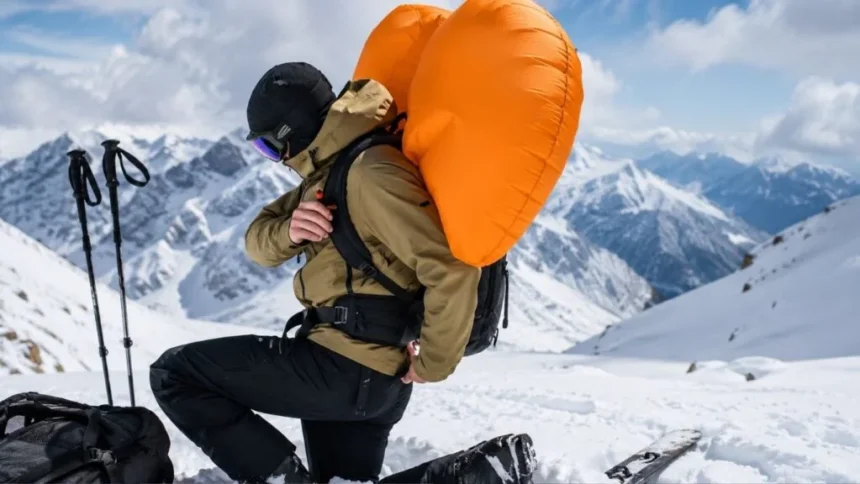
ABS states that training releases can be used to check the system and practice using the release handle. Some ABS systems also allow test releases without consuming a cartridge.
Also read:Mabinogi Lazy Patch: Meaning, How It Works, Safety, Updates, and Player Guide
What Is an ABS Avalanche Airbag?
An ABS avalanche airbag is a backpack system designed for avalanche terrain.
The system combines a backpack with an airbag, activation mechanism, and inflation system. Depending on the model, the system may use a cartridge-based mechanism or another type of activation technology.
When properly activated, the airbag inflates rapidly. The goal of an avalanche airbag is to increase the user’s effective volume during an avalanche, which can help reduce the chance of being completely buried. However, an avalanche airbag is not a guarantee of survival and does not replace avalanche education, terrain assessment, a beacon, probe, shovel, and appropriate decision-making.
ABS describes its systems as avalanche safety equipment and publishes information about testing, maintenance, and technical standards.
Why Is an ABS Testauslösung Important?
A test activation has two main purposes.
The first is equipment familiarity.
The second is system checking.
Someone who has never practiced with an avalanche airbag may not know exactly where the release handle is located or how much movement is needed to activate it. Practicing can make the process more familiar.
ABS recommends annual self-checking and training before the season. The company explains that this helps users check the function of the system while also practicing the movement needed to reach the release handle.
This is especially useful before the winter season begins.
Equipment that has been stored for months should not simply be placed in a backpack and assumed to be ready.
A basic inspection and appropriate training release can help identify problems before the equipment is needed.
How Does an ABS Testauslösung Work?
The exact procedure depends on the ABS system.
This is an important point because ABS has produced different release technologies and models over time.
Some systems use a cartridge-based mechanism. Other systems, such as the ABS EasyTech system, provide a mechanical setup that can be reset after training. ABS also describes test releases that provide visual and physical feedback without consuming a cartridge.
Because of these differences, there is no single test procedure that should be applied to every ABS backpack.
The safest approach is to identify the model first and then follow its official instructions.
For example, the manufacturer’s information for some ABS systems explains that a training activation can be performed without the cartridge, allowing users to practice the handle movement without actually inflating the airbag.
What Is a Dry Test Activation?
A dry test activation is a practice activation that does not fully inflate the avalanche airbag.
This type of test can be useful because a normal deployment may require the system to be repacked afterward.
Mammut, for example, provides a trigger test tool for its Airbag 3.0 system. The tool allows users to practice deployment without using a pressure cartridge. Mammut recommends training deployment so users become familiar with the release mechanism.
The exact tool and method are manufacturer-specific.
Therefore, an ABS user should not assume that a Mammut dry-deployment tool or procedure is compatible with an ABS backpack.
Always use equipment designed for the specific system.
What Happens During a Full Test Deployment?
A full test deployment is different from a dry test.
In a full deployment, the airbag actually inflates. Depending on the system, this may consume the available gas cartridge or require the release unit to be serviced afterward.
ABS explains that some test activations can be performed with a filled cartridge. After such a test, the cartridge may need to be replaced or refilled before the system is used again.
This is why users should understand which type of test their equipment supports.
A full deployment should not be performed casually without knowing what happens afterward.
The backpack needs to be returned to a ready-to-use condition before it is taken into avalanche terrain.
Should You Test an ABS Airbag Before the Ski Season?
Regular pre-season testing is recommended by the manufacturer.
ABS recommends a self-check once a year before the season and recommends practicing deployment.
A pre-season check can help you confirm that the equipment has been stored properly and that you are familiar with its activation.
The process should also include checking the backpack and related components according to the manufacturer’s instructions.
Look for visible damage, unusual wear, problems with straps or buckles, and issues with the release system.
If anything looks damaged or unusual, contact the manufacturer or an authorized service provider before using the equipment in avalanche terrain.
What Should You Check Before an ABS Testauslösung?
Before testing an avalanche airbag, read the instructions for your specific model.
The release system, cartridge, airbag compartment, handle, and other components may vary between generations.
A general inspection can include checking the backpack for visible damage and making sure the airbag system is installed as required by the manufacturer.
The release handle should also be positioned correctly.
If your system uses a cartridge, follow the manufacturer’s instructions for checking the cartridge and its compatibility.
ABS provides product manuals and instructions for several of its avalanche backpack systems through its official support materials.
Do not modify the system or substitute components unless the manufacturer specifically permits it.
What Is the Difference Between a Test Activation and an Emergency Deployment?
The basic activation movement may be similar, but the purpose is completely different.
A test activation is controlled and planned.
An emergency deployment happens during an actual avalanche.
During a test, the user can prepare the equipment, choose a safe location, and check what happens after activation.
During an avalanche, conditions are unpredictable and the user may be moving rapidly.
This is why training matters.
Practicing the activation can make the movement more familiar, but it does not guarantee that a person will activate the airbag correctly during an avalanche.
An airbag should therefore be considered one part of a larger avalanche safety system.
Does an ABS Testauslösung Use a Cartridge?
It depends on the type of test and the specific ABS system.
A full test deployment with a cartridge can consume the cartridge’s contents. ABS explains that its systems can be tested with a filled cartridge, while some systems also allow training without a cartridge.
ABS also describes systems where the user can practice the release without actually deploying the airbag.
This distinction is important because a cartridge-based deployment can create additional costs and preparation work.
If you are planning a test, first determine whether your particular system supports a dry test.
Can You Practice Without Inflating the Airbag?
Some ABS systems allow this.
ABS describes test releases that can be performed without using a cartridge, with feedback showing whether the activation occurred.
This can make regular training easier because the user does not have to fully inflate and repack the airbag every time.
However, the availability of this feature depends on the system.
Older ABS products may operate differently from newer models.
That is why the model-specific manual is more important than general advice found online.
How Often Should You Test an ABS Avalanche Airbag?
ABS recommends an annual self-check before the season and regular practice with the release mechanism.
The company also recommends professional system checks after an avalanche deployment and after certain periods of use. Its current service information recommends a complete system check after an avalanche operation or after roughly three to five seasons, depending on the number of skiing days.
The exact maintenance schedule should always be based on the current instructions for your particular model.
More frequent inspection may also be appropriate if the backpack has experienced unusual stress, visible damage, moisture exposure, or an avalanche deployment.
What If the ABS Airbag Has Already Been Deployed?
A deployed avalanche airbag should not simply be packed away and assumed to be ready again.
ABS recommends a complete system check after an avalanche deployment because the event can place significant stress on the backpack and airbag system. The company’s service check includes examination of components such as straps, buckles, airbag compartments, hoses, cables, release components, and the inflation system.
This is particularly important because damage is not always obvious from the outside.
After a real avalanche deployment, professional inspection can help identify problems that may not be visible during a quick home inspection.
How Does Cold Weather Affect Avalanche Airbags?
Avalanche airbags are designed for cold environments, but cold conditions are still an important part of equipment testing.
ABS states that avalanche airbag systems must meet activation and inflation requirements after being exposed to very low temperatures under applicable testing standards. Its safety information references temperatures down to -30°C for certain standardized testing conditions.
Real-world users should still follow the storage and operating instructions for their particular equipment.
Cold temperatures can affect batteries in electronic equipment, material flexibility, and other components.
This is one reason why understanding your exact system matters.
Mechanical and Electronic Avalanche Airbags
Avalanche airbags are available with different activation technologies.
Mechanical systems use a physical release mechanism.
Electronic systems use powered components and may have batteries that need to be charged and monitored.
ABS has described mechanical advantages for its EasyTech system, including the ability to practice deployment and reset the system without tools.
Other manufacturers also produce electronic avalanche airbag systems. For example, ORTOVOX provides separate instructions and support materials for its electronic AVABAG LiTRIC systems as well as cartridge-based avalanche backpacks.
The important lesson is that users should not mix instructions between different technologies.
Why Training With the Release Handle Matters
An avalanche can create a high-pressure situation.
The release handle may not be immediately visible or easy to locate if the user has never practiced with the backpack.
Training helps build familiarity.
The goal is not to create a guarantee that the airbag will be deployed in every emergency. Instead, practice can help the user understand where the handle is and how the system responds when activated.
ABS specifically recommends training the movement so that it becomes more familiar during an emergency.
This is one of the simplest reasons to understand the meaning of ABS Testauslösung.
It is not just a technical test.
It is also a training exercise.
Common Mistakes During an ABS Test
One common mistake is assuming every avalanche airbag uses the same testing method.
It does not.
Different manufacturers and generations can have different release systems.
Another mistake is performing a full deployment without understanding what must be replaced or refilled afterward.
A third mistake is ignoring the condition of the backpack itself.
The airbag is only one part of the safety system.
Straps, buckles, release components, hoses, cartridges, and other parts can also matter.
Another mistake is testing the system once and then never practicing again.
The purpose of training is familiarity, so occasional practice according to the manufacturer’s recommendations is more useful than a single test performed years ago.
What If the Test Activation Does Not Work?
If an expected test activation does not work, do not assume that the equipment is ready for use.
Stop and consult the official instructions.
Check whether the system was correctly prepared according to the manufacturer’s instructions.
If there is an indication of a mechanical problem, damage, or unexpected behavior, contact the manufacturer or an authorized service center.
Do not attempt to redesign, modify, or repair a safety-critical release mechanism yourself unless the manufacturer specifically provides instructions for that repair.
ABS provides product support and service options for its avalanche systems.
Why Professional Maintenance Matters
Avalanche airbags are safety equipment.
They are exposed to cold, moisture, movement, pressure, and physical stress.
A professional inspection can examine parts that an ordinary user may not be able to evaluate properly.
ABS recommends a complete system check after an avalanche deployment and at specified service intervals.
The company’s service information describes inspection of the carrying system, airbag components, release components, hoses, cables, and inflation system.
This is especially important when an airbag has been used in a real avalanche.
ABS Testauslösung and Cartridge Safety
Cartridges used with avalanche airbags are pressure containers and should be handled according to the manufacturer’s instructions.
Do not open, modify, puncture, heat, or otherwise tamper with a cartridge.
Only use a cartridge that is compatible with the specific airbag system.
Also read:FentoMagazine.com USA: A Complete Guide to the Online Magazine, Its Content, and Digital Presence
ABS provides information about cartridge checking and replacement through its support materials. The company also states that cartridges with certain conditions or age limits may need replacement rather than refilling.
If you are uncertain about a cartridge, contact the manufacturer or an authorized service center.
Traveling With an Avalanche Airbag
Traveling by airplane with an avalanche airbag requires additional planning because the system can include a pressurized cartridge.
Airline and aviation rules can apply.
Mammut’s current travel guidance, for example, states that avalanche airbags and cartridges may be transported under specified conditions and that airline approval is required. It also says the cartridge must be packed to prevent accidental activation.
Rules can vary by airline, route, cartridge type, and jurisdiction.
Therefore, do not rely on a general internet article when preparing an avalanche airbag for air travel.
Check the current rules from your airline and the manufacturer before traveling.
Is an ABS Avalanche Airbag a Complete Avalanche Safety System?
No.
An avalanche airbag is only one part of avalanche safety equipment.
People traveling in avalanche terrain should also understand avalanche hazards and carry appropriate rescue equipment.
Common avalanche rescue equipment includes an avalanche transceiver, probe, and shovel.
Training is also important.
Knowing how to use equipment before an emergency is different from simply carrying it.
An airbag can provide an additional layer of protection, but it cannot prevent an avalanche from occurring and cannot eliminate the risk of injury or burial.
ABS Testauslösung and Avalanche Education
Equipment training works best when combined with avalanche education.
A user should understand terrain, weather, snowpack information, avalanche forecasts, route planning, and group communication.
The airbag is part of a larger safety process.
For U.S. users, avalanche forecasts and educational resources can be found through organizations such as the National Avalanche Center and regional avalanche centers.
These resources can help people understand current avalanche conditions before entering backcountry terrain.
How to Prepare an ABS Airbag for a New Season
Before the winter season, begin with the manufacturer’s inspection instructions.
Check the backpack.
Check the airbag compartment.
Check the release handle.
Check the cartridge according to the manufacturer’s instructions.
Check for visible damage.
Then perform the appropriate training or test activation for your model.
If the system requires a refill or replacement after the test, complete that process before using the backpack in avalanche terrain.
ABS recommends annual self-checking and training before the season.
A few minutes of preparation can help identify equipment problems before they become more serious.
ABS Testauslösung vs. Normal Airbag Deployment
| Feature | Test activation | Emergency deployment |
| Purpose | Training and system checking | Avalanche emergency |
| Environment | Controlled location | Avalanche terrain |
| Preparation | Planned in advance | Often sudden |
| Cartridge use | Depends on test method | Depends on system |
| Main goal | Familiarity and function checking | Deploy the airbag during an emergency |
| Aftercare | May require reset, refill, or repacking | Requires inspection and preparation before reuse |
The exact procedure depends on the airbag model, so the manufacturer’s instructions should always take priority.
What Does a Successful Test Tell You?
A successful test can provide useful information about the activation mechanism.
It can show that the user understands the release movement.
It can also provide an opportunity to identify problems before entering avalanche terrain.
However, a successful test does not prove that every part of the system will work perfectly under every future condition.
Equipment can become damaged after testing.
Storage conditions can change.
A cartridge can require replacement.
The backpack can experience wear.
That is why regular inspection and maintenance remain important.
What Does a Failed Test Mean?
A failed test should be treated seriously.
It may indicate incorrect setup, a depleted or unsuitable component, damage, or another system problem.
The correct response is not to repeatedly force the mechanism or attempt an improvised repair.
Instead, stop using the equipment until you have identified the issue through the official instructions or qualified service support.
Safety equipment should be reliable before entering avalanche terrain.
How to Store an ABS Avalanche Airbag
Storage requirements depend on the model, so follow the manufacturer’s instructions.
In general, safety equipment should be kept in appropriate conditions and protected from unnecessary damage, extreme conditions, and contamination.
The airbag should not be compressed or folded in a way that conflicts with the manufacturer’s instructions.
The release mechanism and cartridge should also be handled according to the manufacturer’s storage requirements.
Before the next season, perform the recommended inspection and training procedure.
How Long Can an ABS Avalanche Airbag Last?
The useful life of an avalanche airbag depends on the model, age, use, maintenance, and condition.
ABS states that, when used as directed and maintained according to its recommendations, an ABS system may have an expected service life of around 10 years under the conditions described by the manufacturer. ABS also states that after 10 years it can no longer offer service or guarantee safe use for that system.
This does not mean every backpack should automatically be used for exactly 10 years.
A system exposed to unusual damage or a serious avalanche event may require earlier inspection or replacement.
Always check the current documentation for your specific model.
Is ABS Testauslösung the Same as a Safety Certification Test?
No.
This is an important distinction.
An individual user performing a test activation is checking or practicing with their own equipment.
A product certification test is performed under standardized conditions to evaluate whether the equipment meets defined requirements.
ABS publishes information about avalanche airbag safety standards and references EN 16716, which covers safety requirements and test methods for avalanche airbag systems.
These standardized tests can examine areas such as deployment, inflation, pressure resistance, impact resistance, temperature conditions, and carrying-system strength.
A personal test activation is much simpler and should not be confused with laboratory or certification testing.
Why Standardized Testing Matters
Safety standards provide a structured way to evaluate equipment.
For avalanche airbags, standardized testing can examine whether a system continues to meet requirements under different conditions.
ABS’s published information on EN 16716 includes testing related to low temperatures, deployment, pressure, impact, and carrying-system strength.
For consumers, this provides useful context.
A personal test activation checks your equipment at a practical level, while formal product testing evaluates the design under defined technical conditions.
Both have different purposes.
Digital Safety When Searching for ABS Testauslösung
People searching for “abs testauslösung” may encounter product pages, videos, manuals, forums, marketplace listings, and social media posts.
Not every source provides the same level of information.
For safety equipment, official manufacturer manuals should receive special attention.
A random video may show an older model.
A forum post may describe a different generation.
A retailer may list a product without explaining its maintenance requirements.
A search result may also combine ABS avalanche airbags with unrelated uses of the abbreviation “ABS.”
Before following instructions, confirm the manufacturer, model, release system, and publication date.
How to Find the Correct ABS Manual
The best starting point is the manufacturer’s support or downloads section.
ABS provides product instructions for multiple avalanche backpack systems, including different models and release mechanisms.
Also read:Kracensoft.com: A Complete Guide to Its Technology Content, Software, AI, and Digital Resources
When looking for instructions, identify the exact model name first.
Do not rely only on the word “ABS.”
The model number or product name can make a major difference.
Once you find the manual, check the sections dealing with setup, activation, training, cartridge handling, storage, and maintenance.
Frequently Asked Questions About ABS Testauslösung
What is the main reason for performing an ABS Testauslösung?
The main reasons are to become familiar with the release handle and to check the activation system according to the manufacturer’s instructions. ABS recommends regular training and self-checking before the season.
Can a test activation damage an ABS avalanche airbag?
A properly performed test according to the manufacturer’s instructions is intended as part of system training or checking. However, the correct procedure depends on the model. A full deployment can also require refilling, replacement, or servicing afterward. For this reason, users should follow the exact instructions for their system.
Do ABS avalanche airbags need professional inspection?
Professional inspection can be important, particularly after an avalanche deployment or after the manufacturer’s recommended service interval. ABS currently recommends a complete system check after an avalanche operation and after approximately three to five seasons depending on use.
Can I use an old ABS cartridge with a newer backpack?
Compatibility should never be assumed. Cartridge type, pressure, release mechanism, and backpack design can differ between systems. Check the manufacturer’s current compatibility information before using a cartridge with an airbag.
Does an ABS Testauslösung mean the avalanche airbag is ready for an emergency?
Not necessarily. A successful test is only one part of equipment preparation. The backpack, airbag, release mechanism, cartridge, and other components must also meet the manufacturer’s requirements. After a full deployment or suspected damage, additional inspection or service may be necessary. An avalanche airbag should also be used together with appropriate avalanche education and rescue equipment.
Conclusion
ABS Testauslösung means a test activation or test deployment of an ABS avalanche airbag system. It is intended to help users become familiar with the release mechanism and, depending on the system, check whether the activation process is functioning correctly.
The most important point is that ABS avalanche airbags are not all identical. Different models and generations can use different release technologies and testing methods. Some systems support dry practice without using a cartridge, while a full test deployment can require refilling or servicing afterward.
For that reason, the safest approach is to identify the exact ABS model and follow its official manual. Regular pre-season inspection and training can help users become familiar with their equipment, while professional service is particularly important after an avalanche deployment or when the manufacturer recommends it.
An avalanche airbag is an important piece of safety equipment, but it is not a substitute for avalanche education, careful terrain decisions, and appropriate rescue equipment. Understanding what an ABS Testauslösung means is therefore one small but useful part of becoming better prepared for winter backcountry travel.