What Is Navigator Pear? A Complete Guide to the Navigator Ornamental Pear Tree
Navigator pear is a hardy ornamental pear tree valued mainly for its attractive shape, white spring flowers, glossy green leaves, and colorful fall foliage. Unlike familiar fruiting pears such as Bartlett, Bosc, or Anjou, Navigator is generally grown as a landscape and flowering tree rather than as a tree for producing large, edible pears.
The name “Navigator pear” can create some confusion because the word pear usually makes people think of a fruit tree. Current nursery information identifies Navigator as an ornamental pear, commonly listed as Pyrus × ‘DurPSN303’. Some nursery sources also use the name Navigator Flowering Pear or Navigator Ornamental Pear.
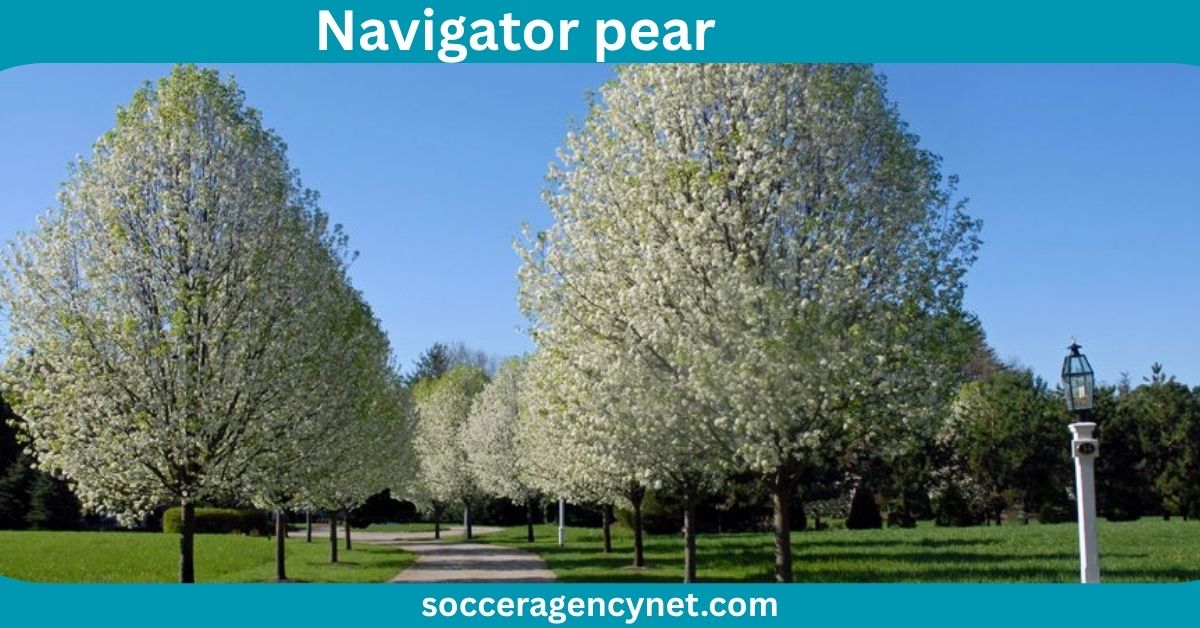
Navigator pear is particularly interesting for homeowners who want a narrow, upright tree that provides several seasons of visual interest. In spring, it produces bright white flowers. During summer, the tree has dark green, glossy foliage. In fall, the leaves can turn yellow, orange, or other warm shades depending on the growing conditions and local climate. Its upright form also makes it useful where a wider shade tree would take up too much space.
Another important point is hardiness. Some online descriptions claim Navigator pear is mainly suitable for USDA Zones 5 through 8. Current nursery references, however, describe Navigator as much more cold tolerant, with several listings placing it in Zone 2 or Zone 3. Because hardiness ratings can vary by nursery, plant selection, rootstock, climate, and regional experience, gardeners should check the current information from a local nursery or extension service before planting.
This guide explains what Navigator pear is, how it grows, its size, flowers, foliage, hardiness, sunlight needs, soil requirements, watering, pruning, common problems, landscape uses, and whether it is a good choice for a U.S. yard.
What Is Navigator Pear?
Navigator pear is an ornamental flowering pear tree used primarily for landscaping.
The cultivar is commonly identified as Pyrus × ‘DurPSN303’. Nursery descriptions characterize it as a dense, upright, pyramidal tree with white spring flowers and glossy green foliage.
This makes Navigator different from a typical backyard pear tree that is planted mainly for fruit.
A fruiting pear is usually selected for the quality, size, flavor, and harvest time of its pears. Navigator is generally selected for the appearance and structure of the tree itself.
It can provide interest during several parts of the year. White flowers appear in spring, green foliage provides summer coverage, and the leaves change color in fall.
The tree’s narrow, upright growth can also be useful in smaller landscape spaces.
Is Navigator Pear a Fruit Tree?
Navigator pear is primarily an ornamental tree rather than a conventional edible-fruit pear.
Some sources describe it as producing small fruit, but these are not the large, sweet pears people normally expect from a fruit orchard. One Canadian nursery describes the fruit as small, hard, and inedible, while other nursery references describe fruit as insignificant or seldom produced.
This is an important distinction.
If your main goal is to harvest pears for eating, Navigator is generally not the first type to consider. Traditional fruiting cultivars such as Bartlett, Bosc, Anjou, or Asian pear varieties are more appropriate when edible fruit production is the priority.
If your goal is a flowering landscape tree with an attractive upright shape, Navigator can be much more interesting.
What Is the Scientific Name of Navigator Pear?
Navigator pear is commonly listed as Pyrus × ‘DurPSN303’.
The “Pyrus” name places it within the pear genus.
The “DurPSN303” designation is the cultivar identifier used by nursery references for Navigator. Several current nursery sources use this identification.
Some sources may use slightly different naming conventions, such as Pyrus ‘DurPSN303’ or Pyrus x ‘DurPSN303’.
For gardeners searching for the plant, using both “Navigator pear” and “Pyrus DurPSN303” can make it easier to find accurate nursery information.
Is Navigator Pear the Same as a Bartlett Pear?
No.
Navigator and Bartlett are different types of pear trees with different purposes.
Bartlett is one of the best-known European-style fruiting pears. It is grown for its edible fruit.
Navigator is primarily an ornamental flowering pear.
Bartlett is therefore a better choice if the goal is to harvest pears for eating, canning, or cooking.
Navigator is generally a better fit when the goal is spring flowers, an upright landscape shape, foliage, and seasonal color.
This difference is important when choosing a tree because a beautiful flowering pear is not necessarily a productive fruit tree.
What Does a Navigator Pear Tree Look Like?
Navigator has a strong upright and pyramidal growth habit.
Its branches create a relatively narrow vertical form compared with many broad shade trees.
Current nursery descriptions commonly place mature height somewhere around 20 to 35 feet, although the exact size varies by source and growing conditions. One nursery lists approximately 23 to 26 feet tall with a spread of 10 to 13 feet, while another lists the tree at about 35 feet tall and 18 feet wide.
This variation is normal.
Tree size can change depending on climate, soil, irrigation, age, rootstock, pruning, and site conditions.
For landscape planning, it is better to allow more room than the smallest published measurement.
How Fast Does Navigator Pear Grow?
Navigator is generally described as a vigorous ornamental tree, but there is no single growth rate that applies to every location.
A tree planted in full sun with adequate moisture and suitable soil can establish more quickly than one planted in poor soil, heavy shade, or a dry location.
Young trees often spend their early years developing roots and establishing their main structure.
Growth may also vary according to climate.
A tree growing in a cold northern region may have a shorter growing season than one in a milder location.
Instead of expecting a precise number of feet per year, homeowners should focus on proper planting, sunlight, watering, soil drainage, and early structural training.
What Are the Flowers Like on Navigator Pear?
One of Navigator’s most noticeable features is its spring flowering.
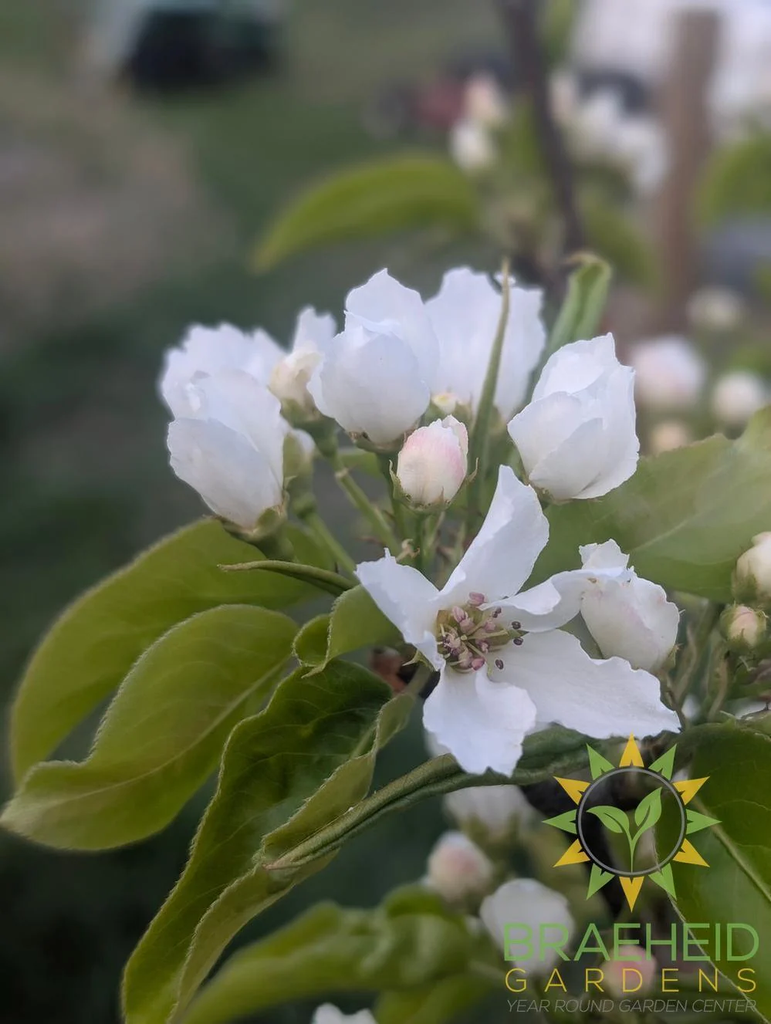
The tree produces clusters of bright white flowers in early to mid-spring. Nursery descriptions highlight the flowers as one of its main ornamental features.
The flowers can create a strong visual display when the tree is mature and healthy.
Spring flowering is especially useful in landscapes because it provides seasonal interest before many summer flowering plants reach their peak.
The exact flowering date depends on local temperatures and the beginning of spring.
A warm spring may bring flowers earlier, while a colder spring can delay flowering.
What Color Are Navigator Pear Leaves?
Navigator pear has dark green, glossy foliage during the growing season.
The leaves provide a clean appearance during summer and contribute to the tree’s value as a landscape specimen.
In autumn, the foliage can change to yellow, orange, and related warm colors. Different nursery descriptions use slightly different terms for the fall color, including yellow-orange and yellow-red.
Fall color can vary from year to year.
Temperature, sunlight, moisture, and other environmental conditions influence how strongly leaves change color.
This means a homeowner should not expect exactly the same fall display every season.
Is Navigator Pear Evergreen?
No.
Navigator pear is a deciduous tree.
This means it loses its leaves during the colder part of the year.
During winter, the tree’s upright structure becomes more visible.
Its branch structure can still provide landscape interest even when the leaves have fallen.
This seasonal change is useful for homeowners who want a tree with different visual qualities throughout the year.
What USDA Hardiness Zones Can Grow Navigator Pear?
Hardiness information for Navigator pear varies among nursery sources.
Some current nursery listings describe Navigator as hardy as Zone 2, while others list Zone 3. For example, Jeffries Nurseries lists Navigator Ornamental Pear as Zone 2, and Blue Grass Nursery also gives a very cold hardiness rating. Another current nursery source describes it as Zone 3.
This is important because it differs from the commonly repeated claim that Navigator is primarily a Zone 5–8 tree.
The available nursery evidence suggests that Navigator was selected for cold tolerance and can perform in significantly colder climates than Zones 5–8.
However, hardiness zones are not guarantees.
A tree’s actual performance can be affected by winter exposure, wind, soil moisture, snow cover, sudden temperature changes, young-tree establishment, and local microclimates.
Gardeners should therefore use the hardiness rating as a starting point rather than a promise.
Does Navigator Pear Need Winter Chilling Hours?
The chilling requirement is an important consideration for fruit trees because many fruiting varieties need a period of cold dormancy before they can flower normally.
Navigator, however, is primarily an ornamental pear.
The available nursery information focuses much more on its cold hardiness and landscape performance than on a specific edible-fruit chilling requirement.
Therefore, it would be misleading to apply a standard fruit-production chilling-hour requirement to Navigator without reliable cultivar-specific evidence.
The statement that Navigator specifically requires a certain number of chilling hours should be treated carefully unless it comes from a credible source discussing this particular cultivar.
For gardeners, the more important questions are whether the tree is adapted to the local winter climate and whether the site provides the growing conditions the tree needs.
Can Navigator Pear Grow in Cold Climates?
Cold tolerance is one of Navigator’s notable features.
Several nursery sources specifically market it for cold or prairie conditions. Jeffries Nurseries lists it as a hardy ornamental pear, while Canadian nursery sources describe Navigator as suitable for northern or prairie landscapes.
This makes it interesting for gardeners in areas where some ornamental pears may struggle.
Cold tolerance does not mean the tree can be planted without considering the site.
A young tree may need protection from physical damage caused by winter winds, animals, or heavy snow.
Proper planting and establishment are still important.
Does Navigator Pear Need Full Sun?
Yes.
Navigator performs best in full sun.
One nursery specifically recommends full sun, and other landscape descriptions also identify full sun as the preferred exposure.
Full sun generally means a location receiving about six or more hours of direct sunlight during the growing season.
Good sunlight helps support:
- Strong growth
- Dense foliage
- Better flowering
- Healthy branch development
- Good fall color
A tree planted in deep shade may become thinner and less attractive.
For the best ornamental effect, choose an open location with plenty of direct sunlight.
Can Navigator Pear Grow in Partial Shade?
It may survive in some partial-shade locations, but full sun is generally the better choice.
Partial shade can reduce flowering and may produce a less dense crown.
If the tree receives morning sun and some afternoon shade, its performance may still be acceptable in some climates.
However, if you have a choice between a sunny and heavily shaded location, the sunny location is generally preferable.
What Soil Does Navigator Pear Prefer?
Navigator pear prefers well-drained soil.
One nursery specifically describes it as preferring moist, well-drained soil with a higher pH.
Good drainage is important because pear trees generally do not perform well when their roots remain in saturated soil for long periods.
Before planting, observe the site after heavy rain.
If water remains around the planting area for a long time, drainage may be a concern.
Improving drainage is often more useful than simply adding more fertilizer.
Can Navigator Pear Grow in Clay Soil?
Navigator is described by some prairie nurseries as tolerant of challenging soils, including clay.
One nursery specifically describes it as tolerant of clay soils, drought, wind exposure, and difficult prairie conditions.
However, clay soil can still create drainage problems.
There is an important difference between tolerating clay and tolerating permanently waterlogged soil.
A tree may grow in clay if the soil drains reasonably well.
Heavy, compacted soil that stays saturated can still cause root problems.
If your yard has dense clay, improve planting conditions where practical and avoid placing the tree in a location where water regularly collects.
How to Plant a Navigator Pear Tree
Planting Navigator correctly during its early years can make a major difference in long-term performance.
Choose a location with full sun.
Check the mature size before planting.
Dig a planting hole that is wide enough to allow the roots to spread naturally.
Do not plant the tree excessively deep.
The root flare should remain near the soil surface.
Backfill with the soil removed from the hole unless a local soil professional recommends a different approach.
Water thoroughly after planting.
Add a layer of mulch around the tree to help maintain soil moisture, but keep mulch away from direct contact with the trunk.
Young trees need consistent attention while their root systems become established.
When Is the Best Time to Plant Navigator Pear?
The best planting period depends on the local climate.
In many cold-climate areas, planting during the dormant season or early spring can work well.
Fall planting can also be suitable in areas where the ground remains workable and winter arrives gradually.
The main goal is to give the tree enough time to establish roots before facing extreme heat or severe winter conditions.
Local nursery and extension recommendations are more useful than a single nationwide planting date.
How Much Water Does Navigator Pear Need?
Newly planted trees need regular watering.
The goal is to keep the root zone adequately moist without keeping it constantly saturated.
During the establishment period, check the soil regularly.
Hot, windy, or dry weather may increase water needs.
Once established, Navigator is described by some nursery sources as relatively drought tolerant, especially in prairie landscapes.
However, drought tolerance does not mean the tree never needs water.
Extended drought can still stress a tree.
Deep, occasional watering is generally more useful than frequent shallow watering when the soil has good drainage.
Should You Mulch Around Navigator Pear?
Mulch can be helpful.
A layer of organic mulch can help conserve soil moisture and reduce competition from grass and weeds.
It can also moderate soil temperature.
Keep the mulch away from the trunk.
A common mistake is piling mulch directly against the trunk, creating a constantly damp environment around the bark.
Instead, leave a small gap around the trunk while spreading mulch over the surrounding root zone.
Does Navigator Pear Need Fertilizer?
Not every Navigator pear needs regular fertilizer.
If the tree is growing well and the foliage looks healthy, excessive fertilization may not be necessary.
Too much nitrogen can encourage excessive leafy growth rather than balanced development.
If the tree shows poor growth or suspected nutrient deficiency, a soil test can provide more useful information than guessing.
Use fertilizer based on actual soil conditions and local recommendations.
A healthy planting site with suitable soil and adequate moisture is often more important than adding large amounts of fertilizer.
How Do You Prune Navigator Pear?
Navigator’s upright structure can reduce the need for heavy pruning.
Young trees benefit from structural training.
Remove branches that are damaged, crossing, rubbing, or poorly positioned.
The goal is to create strong branch connections and maintain the tree’s natural upright form.
Avoid removing large amounts of healthy wood simply to force the tree into an unnatural shape.
Pruning should also take the tree’s mature structure into account.
Because Navigator is valued for its form, excessive pruning can reduce one of its main ornamental qualities.
When Should You Prune Navigator Pear?
The ideal pruning time depends on the purpose of the pruning and local climate.
For many deciduous trees, dormant-season pruning is useful for structural work because the tree has no leaves and the branch structure is easier to see.
However, local disease pressure and climate should be considered.
If you are removing diseased wood, do not wait for a preferred pruning season if immediate removal is recommended for that disease.
When in doubt, local extension services or certified arborists can provide guidance based on your region.
Is Navigator Pear Resistant to Disease?
Navigator is often marketed as having good resistance to common pear diseases.
Some nursery sources specifically describe it as disease resistant or showing good resistance to fire blight.
However, “disease resistant” does not mean “disease proof.”
Disease pressure depends on weather, tree health, planting density, sanitation, pruning, and local pathogen populations.
Even resistant trees should be monitored.
Good air circulation, proper watering, appropriate pruning, and removal of damaged plant material can support overall tree health.
Navigator Pear and Fire Blight
Fire blight is one of the most important diseases associated with pears and related plants.
It is caused by the bacterium Erwinia amylovora.
The disease can cause flowers and young shoots to darken and wilt, sometimes creating a burned appearance.
Navigator is sometimes described by nurseries as having good resistance to fire blight compared with more susceptible pears.
Resistance, however, is not immunity.
Warm, wet spring weather can increase fire-blight pressure.
If you see suspicious blackened shoots, rapid wilting, or other symptoms, avoid making a diagnosis based only on photographs from the internet. Local extension services, arborists, or plant diagnostic laboratories can help confirm the problem.
Common Pests of Pear Trees
Pear trees can be affected by several insects and other pests.
Possible problems include aphids, pear psylla, scale insects, and other pests depending on the region.
Not every Navigator tree will experience serious pest problems.
Regular inspection is often the best first step.
Look at the new growth, undersides of leaves, branches, and developing flowers.
Early detection is usually easier to manage than a severe infestation.
Avoid spraying insecticides automatically.
Unnecessary pesticide use can harm beneficial insects and may not solve the actual problem.
Is Navigator Pear Drought Tolerant?
Some current nursery descriptions specifically market Navigator as drought tolerant once established.
This is a useful characteristic for landscapes where water availability is limited.
However, drought tolerance varies with age and growing conditions.
A newly planted tree is much more dependent on supplemental watering than a mature, established tree.
Even established trees can become stressed during prolonged drought.
Mulching and appropriate deep watering can help reduce stress.
Is Navigator Pear Wind Tolerant?
Navigator has been selected and marketed for challenging prairie conditions, and some nursery descriptions specifically mention tolerance of wind exposure.
Its upright form can make it useful in exposed landscapes.
However, wind tolerance is not the same as immunity from storm damage.
Newly planted trees need strong establishment.
Poorly attached branches, heavy snow, ice, or severe storms can damage any tree.
A properly planted tree with good branch structure has a better chance of handling difficult conditions.
Does Navigator Pear Produce Edible Pears?
Navigator is not normally selected as an edible fruit tree.
Some trees may produce small fruit, but nursery descriptions commonly characterize the fruit as insignificant or inedible.
This is why it should not be confused with a standard orchard pear.
If you want a tree for eating pears, choose a known fruiting cultivar from a reputable nursery.
If you want flowers and landscape structure, Navigator is more appropriate.
Is Navigator Pear Good for Small Yards?
Navigator can be useful in smaller yards because of its upright, relatively narrow form.
However, “small yard” does not mean “no space required.”
A mature Navigator can still reach more than 20 feet tall and several feet wide.
Before planting, consider overhead wires, buildings, sidewalks, driveways, fences, and underground utilities.
A narrow tree is still a tree that needs adequate room for its roots and crown.
Is Navigator Pear Good for Urban Landscaping?
Yes, it can be useful for urban and suburban landscapes.
Its upright shape allows it to occupy less horizontal space than many broad shade trees.
Its spring flowers provide visual interest.
Its glossy summer foliage creates a clean appearance.
Its fall color adds another seasonal feature.
Its reported tolerance of challenging prairie conditions also makes it attractive for some northern and urban landscapes.
However, urban sites can contain compacted soil, road salt, reflected heat, limited rooting space, and pollution.
Site preparation still matters.
Navigator Pear for Boulevards and Streetscapes
Navigator has characteristics that can make it useful for streetscapes and public landscapes.
Its upright form can fit areas where a wide canopy would be difficult.
Its seasonal flowers and foliage provide visual interest.
Its cold tolerance is another reason it is used in northern landscape settings.
A municipal tree selection should still consider local conditions such as sidewalk clearance, utility lines, snow removal, road salt, and root-space limitations.
Does Navigator Pear Attract Pollinators?
Its white spring flowers can provide a seasonal food source for insects that visit flowering trees.
However, it is better to describe this as providing floral resources rather than making broad claims that Navigator is a major pollinator tree.
Pollinator activity varies by location, weather, flowering time, and the presence of other plants.
A landscape designed for pollinators should include a variety of flowering plants that bloom at different times.
Navigator can be one part of that broader planting strategy.
Is Navigator Pear Messy?
Navigator is generally considered less messy than fruiting pear trees because it is not grown for large edible fruit.
Some nursery descriptions specifically note that the small fruit is not considered especially messy.
However, no deciduous tree is completely maintenance free.
Flowers fall after blooming.
Leaves fall in autumn.
Small fruit, twigs, and other plant material can also accumulate.
The amount of cleanup is usually much less of a concern than with trees selected specifically for heavy fruit production.
Does Navigator Pear Have a Bad Smell?
Some flowering pear trees can have flowers with an unpleasant or unusual odor.
The strength of the smell can vary by cultivar and individual tree.
Navigator is generally promoted more for its white flowers and landscape form than for fragrance.
If scent is an important factor in your tree selection, visit a mature specimen in spring when possible.
That gives you a better idea of the actual experience than relying only on a nursery description.
Navigator Pear vs. Traditional Fruit Pears
The biggest difference is purpose.
Navigator is primarily ornamental.
Traditional fruit pears are primarily grown for edible fruit.
Navigator provides:
- White spring flowers
- Upright form
- Glossy green foliage
- Fall color
- Cold tolerance
- Landscape structure
- Small or insignificant fruit
A fruiting pear provides:
- Edible pears
- Harvest potential
- Food production
- Often attractive spring flowers
- Landscape value
If food production is your main goal, choose a fruiting cultivar.
If year-round ornamental structure is the priority, Navigator may be a better match.
Navigator Pear vs. Bradford Pear
Navigator and Bradford pear should not be treated as the same tree.
Bradford pear is a cultivar of Callery pear and has become widely criticized because of its weak branching structure and invasive behavior in parts of the United States.
Navigator is a different ornamental pear selection and is marketed for cold tolerance, upright structure, and landscape performance.
That does not mean every ornamental pear has identical environmental characteristics.
Gardeners should always check their state’s invasive plant guidance before planting ornamental pear species or cultivars.
Local recommendations are especially important in regions where Callery pear and related trees have become invasive.
Does Navigator Pear Need a Pollinator?
Because Navigator is primarily ornamental and not selected for commercial fruit production, pollination is not the main reason to grow it.
The small fruit that may appear is not the primary landscape feature.
If your goal is an edible pear harvest, however, pollination becomes much more important, and you should choose compatible fruiting pear cultivars based on bloom time and local recommendations.
This is another reason not to apply fruit-orchard advice automatically to Navigator.
How Long Does a Navigator Pear Tree Live?
There is no single guaranteed lifespan for Navigator.
Tree longevity depends on planting conditions, disease, storm damage, soil, irrigation, pruning, and general care.
A well-sited ornamental pear can provide landscape value for many years.
The most important factor is not simply how old the cultivar can become under ideal conditions, but whether the tree is planted in a location where its roots, trunk, and crown can develop properly.
What Are the Advantages of Navigator Pear?
Navigator has several qualities that make it attractive to homeowners.
Its upright shape is useful where space is limited.
Its white flowers create a strong spring display.
Its glossy foliage provides summer interest.
Its fall color adds another season of visual appeal.
Its cold tolerance makes it useful in northern landscapes.
Some nurseries also describe it as drought tolerant, disease resistant, and suitable for difficult prairie conditions.
These characteristics make Navigator more than a single-season flowering tree.
What Are the Disadvantages of Navigator Pear?
Navigator is not perfect for every garden.
It is not the best choice if your primary goal is edible pears.
Its mature height can be greater than expected.
Also read:Tozymagazine.com USA: What Is Tozy Magazine, What Does It Cover, and Is It Useful for U.S. Readers?
Its hardiness information varies somewhat among nursery sources.
It still needs proper establishment and maintenance.
Its white flowers may not be suitable for someone who dislikes the odor sometimes associated with flowering pears.
And like any tree, it can experience pests, diseases, storm damage, or poor growth if planted in unsuitable conditions.
Choosing the right tree means considering both strengths and limitations.
How to Care for a Navigator Pear Tree
Good Navigator pear care does not have to be complicated.
Start by selecting a sunny location.
Provide well-drained soil.
Water consistently while the tree establishes.
Use mulch around the root zone without piling it against the trunk.
Prune selectively to maintain strong branch structure.
Monitor for disease and insects.
Avoid unnecessary fertilizer.
Check the mature size before planting.
These basic practices can prevent many common landscape problems.
Common Navigator Pear Growing Problems
Several problems can occur if the tree is planted or maintained poorly.
Poor drainage can stress the roots.
Deep shade can reduce growth and flowering.
Drought can stress young trees.
Improper pruning can weaken the structure.
Fire blight can affect susceptible plant tissue under favorable conditions.
Insect pests can damage leaves and shoots.
Winter injury can occur even in cold-hardy plants during unusual weather events.
The solution is not always more treatment.
Often, better site selection and basic tree care are the most effective first steps.
Is Navigator Pear a Good Tree for Beginners?
Navigator can be a reasonable choice for a beginner who wants an ornamental tree rather than an edible fruit tree.
Its main requirements are straightforward: sunlight, suitable soil, adequate water during establishment, and occasional pruning.
The main challenge is understanding what the tree is actually for.
A beginner expecting a large harvest of sweet pears could be disappointed.
A beginner looking for a flowering, upright, cold-hardy landscape tree may be much happier with it.
Knowing the purpose of the cultivar before buying it is one of the most important parts of successful gardening.
What to Check Before Buying Navigator Pear
Before purchasing a Navigator pear tree, check the nursery label carefully.
Look for the botanical or cultivar name.
Confirm whether the nursery is selling the ornamental Navigator cultivar.
Check the mature height and width.
Ask about the hardiness zone used by that nursery.
Look at the recommended sun exposure.
Ask whether the tree is grafted and, if so, what rootstock is being used.
Also check whether the nursery has local experience with Navigator.
Local experience can be especially valuable because climate and soil conditions vary greatly across the United States.
Why Nursery Information Can Be Different
It is common for plant descriptions to disagree.
One nursery may list a tree at 23 feet.
Another may list it at 35 feet.
One may give Zone 2.
Another may give Zone 3.
These differences do not necessarily mean that one nursery is intentionally wrong.
Tree size and hardiness can vary with climate, rootstock, soil, pruning, and the standards used by different horticultural businesses.
This is why gardeners should compare several reputable sources and consider local growing experience.
Is Navigator Pear Suitable for the Southern United States?
Navigator’s strong cold tolerance makes it especially interesting in northern climates.
That does not automatically mean it is the best ornamental pear for every part of the South.
Hot, humid climates create different pressures, including heat stress, disease pressure, and different winter conditions.
Before planting Navigator in a warm region, check with a local extension service or nursery familiar with the cultivar.
A plant that performs exceptionally well in the Canadian Prairies may behave differently in a hot southern landscape.
Is Navigator Pear Suitable for the Midwest?
Navigator can be an interesting option for Midwestern gardeners, particularly where cold tolerance is important.
Its upright shape can work well in suburban yards.
Its spring flowers and fall foliage add seasonal interest.
However, Midwest conditions vary greatly.
Northern Minnesota is very different from southern Missouri.
Local hardiness, soil type, spring frost patterns, and disease pressure should all be considered.
Is Navigator Pear Suitable for the Northeast?
The Northeast has a wide range of climates.
Navigator’s cold tolerance can make it attractive in colder parts of the region.
However, gardeners should still consider site exposure, snow, ice, soil drainage, and spring weather.
A sunny site with adequate drainage is generally preferable.
Is Navigator Pear Suitable for the West?
Western U.S. conditions range from cool and wet to extremely hot and dry.
Navigator may perform well in some western locations, but the answer depends heavily on the specific climate.
High desert areas may create irrigation challenges.
Coastal regions may have different disease and winter conditions.
Mountain areas may have severe cold and short growing seasons.
Local plant recommendations are therefore especially important in the West.
Final Thoughts
Navigator pear is best understood as an ornamental flowering pear rather than a traditional fruit-producing pear.
The cultivar is commonly identified as Pyrus × ‘DurPSN303’ and is valued for its upright, pyramidal form, white spring flowers, glossy green foliage, and yellow-to-orange fall color. Current nursery information also highlights its cold tolerance and suitability for northern and prairie landscapes.
One important correction for gardeners is the hardiness information. Although some online descriptions place Navigator in Zones 5–8, several current nursery sources list it as hardy to Zone 2 or Zone 3. This suggests that the commonly repeated Zone 5–8 claim should not be treated as a definitive description of the cultivar.
Navigator is a strong choice when the goal is landscape beauty rather than a large harvest of edible pears. Its narrow form can work well in yards, streetscapes, parks, and other spaces where a broad shade tree may not fit.
For the best results, plant it in full sun, provide well-drained soil, water it properly during establishment, and give the mature tree enough room to develop. Before purchasing, confirm the cultivar name and compare current nursery information with recommendations from local horticultural professionals.
Frequently Asked Questions About Navigator Pear
Can Navigator pear be planted near a house?
Navigator can be planted near a home if there is enough space for its mature height and width. Because mature trees can reach more than 20 feet tall and may spread 10 feet or more, avoid planting too close to walls, foundations, utility lines, roofs, or other structures. Always consider the mature size rather than the size of the young nursery tree.
Does Navigator pear lose its leaves in winter?
Yes. Navigator is a deciduous ornamental pear, so it loses its leaves during the colder season. After the leaves fall, its upright branch structure remains visible and can continue to provide some landscape interest.
Can Navigator pear survive extreme winter temperatures?
Navigator is considered highly cold tolerant by several current nursery sources, with listings as hardy to Zone 2 or Zone 3. However, hardiness ratings are not guarantees for every site. Young trees, exposed locations, winter wind, sudden temperature changes, and other local conditions can affect survival and performance.
Is Navigator pear a good replacement for an edible pear tree?
Not if your main goal is harvesting large, sweet pears. Navigator is primarily an ornamental pear and may produce only small, insignificant fruit. If you want edible pears, choose a fruiting cultivar specifically recommended for your climate and pollination conditions.
Can Navigator pear be grown from a pear seed?
Growing a named cultivar such as Navigator from seed will not reliably reproduce the same tree. Named ornamental cultivars are normally propagated vegetatively so that their specific characteristics are maintained. If you want a true Navigator pear, purchasing a correctly labeled nursery-grown tree is a much more reliable approach.