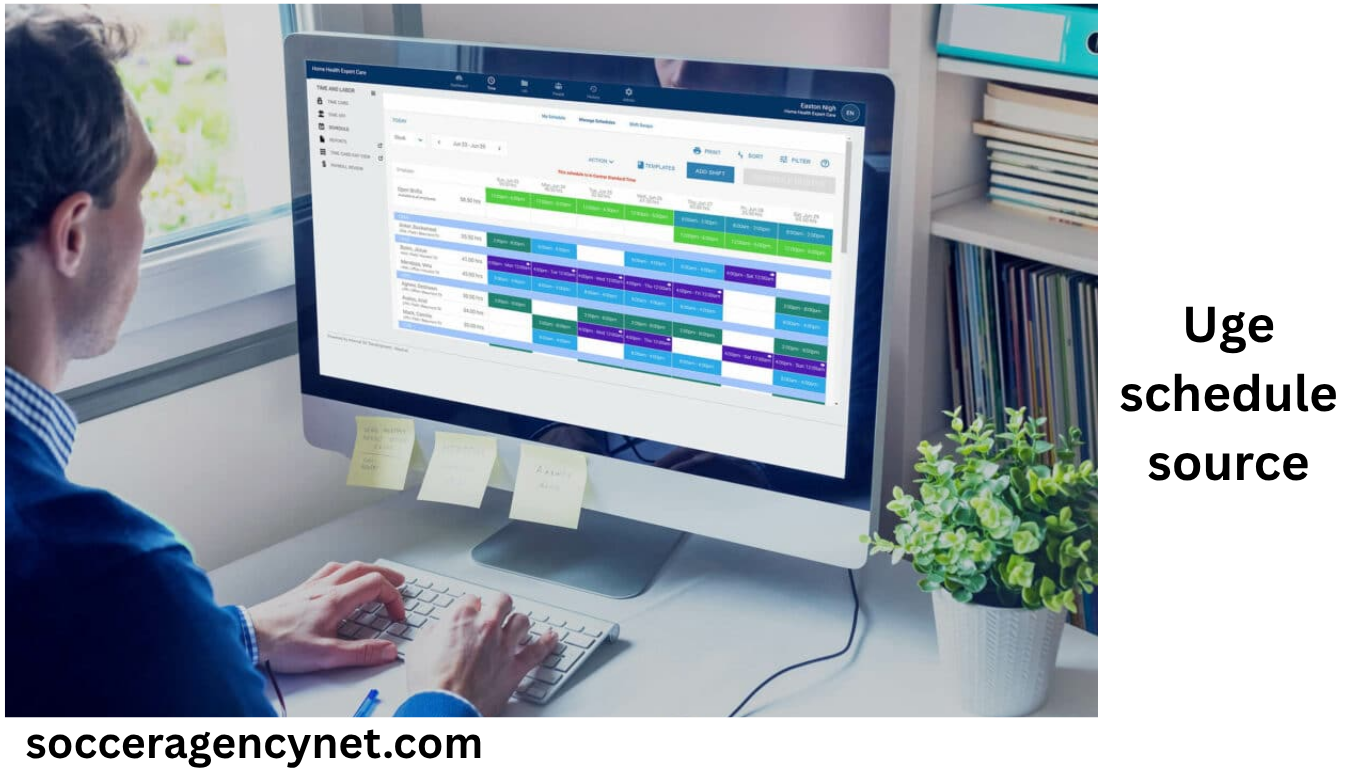
UGE Schedule Source: A Complete Guide to Finding, Understanding, and Using UGE Schedules
The phrase “uge schedule source” can be confusing because it does not clearly identify one universally recognized website, service, or scheduling system. In many searches, people may use the term when they are trying to find the original source of a UGE schedule, confirm a schedule they found somewhere else, or understand where schedule information comes from.
For that reason, the best way to understand uge schedule source is to focus on the meaning behind the search. A schedule is useful only when people can determine where the information came from, how recently it was updated, and whether it applies to the correct organization, event, class, program, or service.
In the United States, schedules are used everywhere. Colleges publish academic schedules. Employers create work schedules. Transit agencies publish route timetables. Sports organizations release game schedules. Government agencies publish appointment and meeting calendars. Events use schedules to tell visitors when activities begin and end.
Because schedules change frequently, the source matters almost as much as the schedule itself.
A schedule copied from an old page may be inaccurate. A social media post may have been replaced by an official announcement. A third-party calendar may not reflect a last-minute change. An image shared online may not include the latest update.
This guide explains what uge schedule source can mean, how to identify a reliable schedule source, how to verify schedule information, why original sources matter, and how users can avoid common schedule mistakes.
What Does UGE Schedule Source Mean?
The term uge schedule source can generally be understood as the original or authoritative location where a particular UGE-related schedule is published.
The word “source” is especially important.
If someone searches for a schedule, they may find the same information on several websites. One page may publish the schedule first, while other pages simply copy it.
The original source is usually the most useful place to verify changes.

Coruzant
For example, imagine an organization publishes a schedule on its official website. Another website copies that schedule into a searchable database. A social media account then posts a screenshot of the same schedule.
Also read:Soutaipasu: Meaning, Mental Anchor, Calm Thinking, and How to Use It in Daily Life
All three may show similar information.
However, if the organization changes the schedule, the official page is more likely to be updated first.
This creates a simple hierarchy:
- Official schedule source
- Official announcement or communication
- Authorized partner or platform
- Reputable third-party source
- Social media repost
- User-generated copy or screenshot
The lower a source is on this list, the more carefully its information should be checked.
Why the Source of a Schedule Matters
Schedules are not permanent documents.
They can change because of holidays, weather, staffing, cancellations, facility problems, transportation delays, event changes, or administrative decisions.
This means that a schedule without a reliable source can create confusion.
Consider a student who finds a class schedule through an old search result. The page says a class starts at 9:00 AM, but the institution moved it to 10:00 AM.
The student arrives early or misses another activity.
The same problem can happen with travel.
A person may find an old timetable and plan a trip around it. If the service has changed, the information becomes useless.
The lesson is simple: do not ask only, “What is the schedule?”
Also ask, “Where did this schedule come from?”
That second question is the foundation of good schedule research.
How to Find the Original UGE Schedule Source
Finding the original source requires a little more than clicking the first result in a search engine.
Start by identifying what UGE refers to in your specific situation.
UGE could potentially be an abbreviation, organization name, program name, department, event, or another term.
Once the meaning is clear, look for the organization’s official website.
Search for pages using terms such as:
- UGE schedule
- UGE timetable
- UGE calendar
- UGE events
- UGE academic schedule
- UGE program schedule
- UGE dates
- UGE schedule 2026
- official UGE schedule
Adding the year is especially useful when schedules change annually.
For example, a schedule from 2025 should not automatically be assumed to apply in 2026.
Check the Website Domain
The website domain can provide an important clue.
Official organizations often publish schedules on their own domains.
For example, a university may publish information on its university domain rather than on an unrelated blog.
Government agencies often use official government domains.
Businesses usually use their own company websites.
However, a domain alone is not absolute proof.
A website can look professional while still publishing outdated or unofficial information.
That is why domain verification should be combined with other evidence.
Look for an Official Schedule Page
Once you reach the official website, look for a dedicated page.
Common page titles include:
- Schedule
- Calendar
- Academic Calendar
- Events Calendar
- Timetable
- Program Dates
- Important Dates
- Class Schedule
- Game Schedule
- Service Schedule
A good schedule page often includes a publication date, update date, downloadable document, or links to related announcements.
The more context provided, the easier it is to verify the information.
Check the Publication Date
A schedule without a date can be difficult to trust.
Suppose you find a page titled “UGE Schedule.”
If the page was published several years ago, you should not assume that it is current.
Look for wording such as:
“Updated August 2026”
“2026 Schedule”
“Fall 2026 Calendar”
“Effective January 1, 2026”
These details can help determine whether the schedule applies to your situation.
A recent update does not automatically mean the schedule is correct, but it is an important signal.
Check the Effective Date
Publication date and effective date are not always the same.
An organization may publish a schedule in July that does not become active until September.
For example:
Published: July 15, 2026
Effective: September 1, 2026
This distinction matters.
A person who uses the publication date as the operating date could misunderstand the schedule.
Always check whether the page specifies when the schedule actually begins.
Check for Schedule Revisions
Some organizations publish multiple versions of the same schedule.
A document might say:
Version 1
Revised Schedule
Updated Schedule
Final Schedule
Amended Calendar
Schedule Change
If several versions exist, look for the latest official version.
A revised schedule generally takes priority over an older version.
However, users should still read the revision notes because the change may apply only to certain dates or activities.
Why Search Engines Can Show Outdated Schedules
Search engines are extremely useful, but they do not guarantee that every result is the latest version.
Search engines index pages at different times.
An older schedule may continue appearing in search results even after a newer schedule has been published.
This is especially common when:
- The old page has many backlinks
- The new page has not been indexed yet
- The organization keeps old PDFs online
- The old document has strong search visibility
- Other websites continue linking to the old version
This is why search visibility should not be confused with current accuracy.
The first result is not necessarily the newest schedule.
UGE Schedule Source and PDF Documents
PDF files are commonly used for schedules.
They are convenient because an organization can publish a fixed document that users can download, print, and share.
However, PDFs create a special problem.
A PDF can remain online for years.
A search engine may index an old PDF even after the organization has released a newer version.
When you find a UGE schedule in PDF form, check:
- Document title
- Year
- Publication date
- Revision date
- Effective date
- Version number
- Official website domain
- Links to related announcements
If the PDF does not contain enough information, return to the organization’s main schedule page.
The Difference Between a Primary and Secondary Schedule Source
A primary source is the organization or authority responsible for the schedule.
A secondary source republishes or summarizes that information.
For example, if an organization creates a schedule and a news website reports it, the organization is the primary source.
If a third-party website copies the schedule, that website is a secondary source.
Primary sources are generally preferable for schedule verification because they are closer to the original decision.
Secondary sources can still be useful.
They may explain changes in simpler language or collect schedules from multiple organizations.
But users should confirm important details against the primary source.
How to Verify a UGE Schedule
Schedule verification can be done using a simple process.
First, identify the organization responsible for the schedule.
Second, locate its official website.
Third, find the relevant schedule page.
Fourth, check the date and year.
Fifth, look for revisions or announcements.
Sixth, compare the information with other official communications.
Seventh, confirm that the schedule applies to your specific location, program, group, or event.
This process may take only a few minutes and can prevent major mistakes.
Why Dates Need Special Attention
Dates are one of the easiest parts of a schedule to misunderstand.
A schedule might use different date formats.
For example:
03/04/2026
In the United States, many readers interpret this as March 4, 2026.
In some other countries, it could mean April 3, 2026.
For a US audience, this is one reason professional schedules should ideally spell out months.
“March 4, 2026” is clearer than “03/04/26.”
This is a small formatting choice, but it can prevent serious confusion.
Understanding Time Zones
Time zones are another important issue.
A schedule may be created in one time zone but viewed by people elsewhere.
This matters particularly for:
- Online events
- Webinars
- Sports
- Conferences
- Remote classes
- Live broadcasts
- International meetings
A schedule should ideally state the time zone.
For example:
7:00 PM Eastern Time
is more useful than simply:
7:00 PM
If a UGE schedule is intended for users across the United States, time-zone information becomes even more important.
Daylight Saving Time and Schedule Changes
Daylight Saving Time can create confusion when schedules involve recurring events.
A schedule may be written in local time, but the corresponding UTC time can change during the year.
For everyday local activities, users generally care about the local time displayed by the organization.
For online events involving several states or countries, however, time-zone conversion becomes important.
The safest approach is to use the time zone explicitly provided by the official organizer.
UGE Schedule Source and Academic Calendars
If UGE refers to an educational organization or university-related program, schedule research requires special attention.
Academic calendars can include:
- Registration dates
- Class start dates
- Drop deadlines
- Withdrawal deadlines
- Examination periods
- Holidays
- Breaks
- Graduation dates
- Application deadlines
These dates are often different from ordinary event schedules.
An academic calendar may also have separate schedules for undergraduate students, graduate students, faculty, and staff.
Therefore, finding the correct schedule is more important than finding any schedule.
UGE Schedule Source for Events
Event schedules can change quickly.
Concerts, conferences, festivals, sporting events, and public programs may experience last-minute changes.
Weather can also affect outdoor events.
If you are attending an event, check the official organizer’s schedule shortly before leaving.
This is especially important when the schedule includes:
- Doors open time
- Start time
- Registration time
- Break periods
- Main presentation
- Closing time
Do not assume that a schedule posted months ago remains unchanged.
UGE Schedule Source for Sports
Sports schedules are another area where source verification matters.
A game may be moved because of weather, television scheduling, venue availability, or other factors.
Also read:Schoology Alfa: Complete Guide to the Learning Platform, Features, Login, Benefits, and Student Use
Third-party sports websites can be useful for quick information, but official team, league, or venue sources are better for final confirmation.
If you are traveling to attend a game, always verify the date and start time close to the event.
UGE Schedule Source for Transportation
Transportation schedules require especially careful verification.
A timetable may change because of:
- Construction
- Service disruptions
- Seasonal schedules
- Holidays
- Maintenance
- Weather
- Route changes
For travel in the United States, the official transportation provider should normally be treated as the strongest source.
Third-party travel applications are useful for planning, but official alerts can provide more current information when unexpected changes occur.
How Social Media Fits Into Schedule Research
Social media can be useful for discovering schedule updates.
An organization may announce a cancellation on its social media account before updating its website.
This makes social media valuable for real-time information.
However, social media should not always replace the official schedule page.
A post may be deleted.
An account may be impersonated.
A screenshot may be edited.
A message may lack complete context.
For major schedule changes, look for confirmation from an official channel.
Screenshots Are Not Ideal Schedule Sources
Screenshots are easy to share, but they have limitations.
A screenshot does not always show:
- The full schedule
- The original URL
- The publication date
- The update date
- The organization name
- The applicable year
It may also become outdated.
If someone sends you a screenshot of a UGE schedule, treat it as a clue rather than final proof.
Try to locate the original page.
Why Third-Party Schedule Websites Can Be Useful
Third-party schedule websites are not automatically unreliable.
In some cases, they provide better search tools than official websites.
They may combine information from multiple organizations and make comparisons easier.
For example, a third-party calendar might allow users to search by date, location, category, and time.
That convenience is valuable.
The problem occurs when users assume the third-party site is always current.
The best approach is to use third-party sources for discovery and official sources for final verification.
A Practical Source-Verification Method
A useful method is to ask five questions.
Who Published It?
Identify the organization or person responsible.
When Was It Published?
Find the publication date.
When Was It Updated?
Look for the latest revision.
What Period Does It Cover?
Confirm the year, season, semester, or event period.
Is There a Newer Official Version?
Search the official website for revisions and announcements.
If you can answer all five questions, you have a much stronger basis for trusting the schedule.
How to Search for UGE Schedule Source on Google
Search queries can make a major difference.
Instead of searching only:
“uge schedule source”
try combinations that include the relevant context.
Examples include:
“UGE official schedule”
“UGE schedule 2026”
“UGE calendar 2026”
“UGE timetable official”
“UGE schedule PDF”
“UGE schedule updated”
“UGE schedule dates”
“UGE schedule official website”
If you know the organization, include its full name.
This helps remove unrelated results.
Search by Exact Phrase
If “UGE schedule source” appears on a specific webpage, use quotation marks around the phrase when searching.
For example:
“uge schedule source”
Exact-phrase searching can help identify pages using the same wording.
However, it may also produce limited results if the phrase is uncommon.
For broader research, combine the exact phrase with additional terms.
Search by File Type
If you believe the schedule is a PDF, adding filetype:pdf to a search can sometimes help locate documents.
For example:
“UGE schedule” filetype:pdf
This can be useful when organizations publish downloadable calendars.
But remember that an indexed PDF may be old.
Always check its date.
Search Within the Official Website
If you know the official domain, site-specific searching can reduce irrelevant results.
A query such as:
site:official-domain.example UGE schedule
can help locate pages within that domain.
This is particularly useful when an organization’s website has many pages.
How Website Structure Can Help
Official websites often organize schedules under predictable sections.
Look for:
- Calendar
- Students
- Events
- Academics
- Programs
- Services
- Resources
- News
- Announcements
If you cannot find a schedule through the main menu, the site’s search function may help.
You can also search the web using the organization’s domain.
UGE Schedule Source and Trustworthiness
Trustworthiness is more than having a professional-looking website.
A strong schedule source should ideally provide:
- Clear ownership
- Current information
- Contact details
- Publication dates
- Revision history
- Relevant context
- Consistent information
- Official confirmation
A page with these characteristics is generally easier to evaluate.
How to Handle Conflicting Schedules
Sometimes two sources show different times.
Do not simply choose the one that appears first.
Instead, determine which source is more authoritative and current.
For example:
Official website: 6:00 PM
Third-party calendar: 7:00 PM
Social media repost: 7:00 PM
If the official page was updated recently, it should generally receive greater weight.
If the official page is old but an official social account has announced a change, check whether the website has a newer notice.
The goal is not to count how many sources say each time.
The goal is to identify the most authoritative current information.
What Makes a Schedule Source High Quality?
A high-quality schedule source usually has five characteristics.
Accuracy means the information reflects the organization’s actual schedule.
Freshness means the information has been updated when necessary.
Authority means the publisher has responsibility for the schedule.
Clarity means dates and times are easy to understand.
Context means users can tell what the schedule applies to.
These qualities are more important than how attractive the webpage looks.
Common Mistakes When Searching for a Schedule
One common mistake is trusting the first search result.
Another is using an old PDF.
Another is confusing a calendar with a timetable.
Another is ignoring time zones.
Another is assuming a recurring schedule never changes.
Another is relying on a screenshot.
Another is failing to check cancellation announcements.
Another is copying information from a third-party website without verification.
Avoiding these mistakes can dramatically improve schedule accuracy.
Why Updated Information Matters in 2026
Schedule information is highly time-sensitive.
A page that was accurate last year may be irrelevant now.
For anyone searching for uge schedule source in 2026, the year should be part of the verification process.
The current date, update date, effective period, and revision status all matter.
This is especially important when searching through older content that continues to appear in search results.
How to Create a Reliable UGE Schedule Reference
If you need to save schedule information for later, record more than the dates.
Save:
- Schedule title
- Organization
- Year
- Effective period
- Source page
- Publication date
- Last update date
- Version number
- Important notes
This makes the information much easier to verify later.
If the schedule changes, you can compare the new version with the old one.
Why Source Transparency Helps Users
A schedule should not force users to guess where the information came from.
A clear source helps people verify the information themselves.
This is particularly important for websites that publish informational articles.
If a website discusses a schedule, it should clearly distinguish between:
- Official information
- Interpretation
- Commentary
- Historical information
- Third-party information
This improves reader confidence.
UGE Schedule Source and SEO
From an SEO perspective, schedule-related searches have a strong need for freshness.
Search engines try to provide useful results, and schedule queries are often time-sensitive.
A page targeting uge schedule source should therefore focus on search intent rather than keyword repetition.
Repeating “uge schedule source” in every paragraph would make the article unnatural.
A stronger strategy is to use related phrases naturally, such as:
- UGE schedule
- UGE timetable
- UGE calendar
- official UGE schedule
- UGE schedule 2026
- UGE schedule source
- UGE schedule updates
- UGE schedule information
- UGE schedule PDF
- current UGE schedule
- UGE dates and times
The content should answer the user’s real questions.
That is more valuable than simply repeating a keyword.
How to Humanize Schedule Content
A useful schedule article should sound like a person helping another person.
Avoid unnecessary technical language.
Instead of saying:
“Users must authenticate the temporal validity of schedule metadata through primary-source corroboration.”
Say:
“Always check the official source to make sure the schedule is current.”
The second sentence is easier to understand.
Simple writing also makes informational content more accessible to a wider US audience.
Why E-E-A-T Matters for Schedule Topics
Google’s quality principles place importance on experience, expertise, authoritativeness, and trust.
Schedule information benefits from these principles because users need reliable facts.
A strong page should explain:
Where the information comes from.
How it can be checked.
When it was updated.
What limitations may exist.
This is especially important when schedules affect travel, school, work, events, or deadlines.
Trust is created through transparency, not exaggerated claims.
A Better Way to Think About “Source”
One useful interpretation is that a schedule source is not merely a URL.
It is a chain of evidence.
For example:
Organization decision → official announcement → official schedule → third-party calendar → social media repost.
The farther information travels from the original decision, the greater the chance that context can be lost.
This does not mean every third-party source is wrong.
It means users should understand where the information originated.
How to Know When a Schedule Needs Rechecking
Recheck the schedule when:
- You are traveling a long distance
- The event is happening soon
- Weather may affect the event
- The organization has announced changes
- You found the schedule through social media
- The schedule is several months old
- You are using a third-party website
- The page does not show an update date
- Two sources disagree
The closer you get to an important event, the more valuable current verification becomes.
The Future of Digital Scheduling
Scheduling is becoming more dynamic.
Instead of static documents, modern platforms increasingly use calendars that update automatically.
Users may receive notifications when times change.
AI can potentially summarize schedule changes.
Digital calendars can synchronize across devices.
Organizations can send real-time alerts.
These technologies can make schedules easier to manage.
But automation creates another responsibility: users need clear information about when data was last updated.
A smart schedule is only useful if its underlying data is accurate.
Could AI Improve UGE Schedule Search?
AI can make schedule research easier by helping users understand complex calendars.
For example, instead of searching through a long document, a user could ask:
“What time does the Thursday event start?”
An AI system could identify the relevant entry.
It could also explain date conflicts or summarize schedule changes.
However, AI should not invent missing schedule information.
If the source does not provide an answer, the system should say that the information cannot be confirmed.
This is an important principle for reliable schedule tools.
Why Users Should Prefer Original Sources
The original source generally has the strongest connection to the schedule.
It is the organization that created, approved, or controls the information.
This does not mean the original source is always perfect.
Organizations can make mistakes.
Websites can remain outdated.
Announcements can be unclear.
But the official source gives users the best starting point for verification.
UGE Schedule Source: A Practical Checklist
Before relying on a UGE schedule, check:
- Is this the official organization?
- Is the schedule for the correct year?
- Is the page current?
- Is there an update date?
- Is there a revision?
- Is the time zone clear?
- Does the schedule apply to my location?
- Are there cancellation notices?
- Does another official source confirm it?
- Is the information coming from a screenshot or repost?
If the answer to these questions is clear, you can have much greater confidence in the schedule.
Final Thoughts
The search term uge schedule source is ultimately about more than finding a list of dates and times. It is about finding information that can be trusted.
A schedule is only useful when it is current, relevant, and connected to the right organization or event. Search engines, third-party calendars, PDFs, social media posts, and screenshots can all help with discovery, but they should not automatically be treated as the final authority.
The safest approach is straightforward: identify what UGE means in your specific context, find the organization responsible for the schedule, locate its official calendar or timetable, check the publication and update dates, look for revisions, and confirm any important changes.
For people in the United States, details such as date format, time zone, holidays, seasonal changes, and last-minute announcements can also affect how a schedule should be interpreted.
The broader lesson is useful for almost any schedule search. Do not simply ask whether information exists. Ask where it came from, when it was updated, what period it covers, and whether the source has authority over the schedule.
That approach makes it easier to separate current information from outdated copies and helps readers make better decisions with less confusion.
As scheduling becomes more digital, automated, and AI-assisted, source verification will remain important. Technology can make schedules easier to find and understand, but the quality of the underlying information still determines whether a schedule deserves to be trusted.
Frequently Asked Questions About UGE Schedule Source
Is “UGE schedule source” the name of a specific website?
Not necessarily. The phrase can be used as a search query for finding the original or authoritative source of a UGE-related schedule. The exact meaning of UGE depends on the context in which the term is being used.
Why does my UGE schedule look different on two websites?
One source may be outdated, while another may contain a revised schedule. Compare publication dates, update dates, and official announcements before deciding which schedule is current.
Can a Google search result be considered an official schedule source?
Not by itself. Google is a search engine, not the organization responsible for the schedule. Use Google to locate the schedule, then verify the information on the official website or another authoritative source.
Is a UGE schedule PDF reliable?
A PDF can be reliable if it comes from the responsible organization and represents the current schedule. Always check the year, publication date, revision date, and effective period.
Should I trust a schedule posted on social media?
Social media can provide useful updates, especially for cancellations and last-minute changes. However, important information should ideally be confirmed through the organization’s official website or another official communication channel.