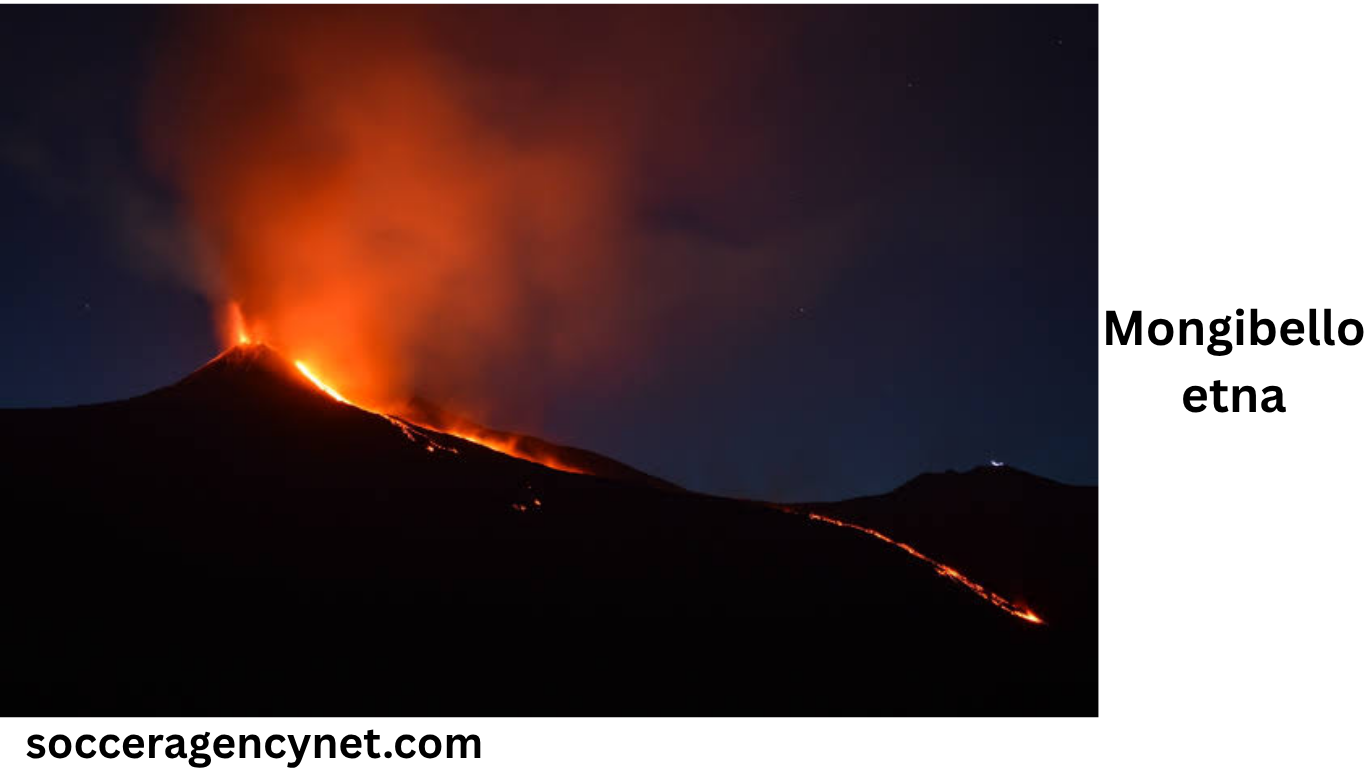
Mongibello Etna: The Meaning, History, Geology, and Beauty of Sicily’s Great Volcano
Mongibello Etna is one of the most interesting names associated with Mount Etna, the enormous active volcano that dominates eastern Sicily. For visitors, the word may sound like the name of a separate mountain. It is not. Mongibello is another traditional name for Etna, and the term has a fascinating history connected with both Italian and Arabic language traditions.
Today, the name Mongibello Etna can be understood as a link between the mountain’s ancient identity, its volcanic landscape, and the people who have lived around it for centuries. Etna is much more than a mountain covered in black volcanic rock. It is a constantly changing geological system, a cultural symbol, a source of fertile soil, a scientific research site, and one of Sicily’s most famous natural attractions.
Mount Etna stands on the eastern coast of Sicily, Italy. UNESCO recognizes the volcano as a World Heritage Site because of its exceptional geological importance and its unusually long record of documented volcanic activity. UNESCO states that Etna’s eruptive history goes back roughly 500,000 years, while human records document activity for at least 2,700 years.
For anyone searching for Mongibello Etna, understanding the name is only the beginning. The deeper story includes ancient languages, volcanic evolution, lava flows, summit craters, the Valle del Bove, Sicilian agriculture, mythology, tourism, and modern volcano monitoring.
This guide explains all of these subjects in simple American English while also looking at what makes Mongibello Etna scientifically and culturally important.
What Is Mongibello Etna?
Mongibello Etna is another name for Mount Etna.
The word Mongibello has traditionally been used in Sicily to describe Etna. The name comes from a combination involving the Italian word monte, meaning “mountain,” and the Arabic word jabal or gebel, also meaning “mountain.” In other words, Mongibello is essentially a repeated idea of “mountain mountain.” The Italian linguistic dictionary Treccani describes Mongibello as another name for Etna and identifies the term as a combination of monte and the Arabic jabal.
This unusual name reflects Sicily’s complex history.
Sicily has been influenced by Greek, Roman, Byzantine, Arab, Norman, Spanish, and other cultures. The island’s language and place names often preserve evidence of those different periods. Mongibello is a particularly clear example because the name combines two words with essentially the same meaning.
The mountain is also known locally by other names. In Sicilian, Etna can be called Muncibbeddu, while A Muntagna means “the mountain.” Italy’s official tourism portal also identifies Etna with the Sicilian name Muncibbeddu and the traditional name Mongibello.
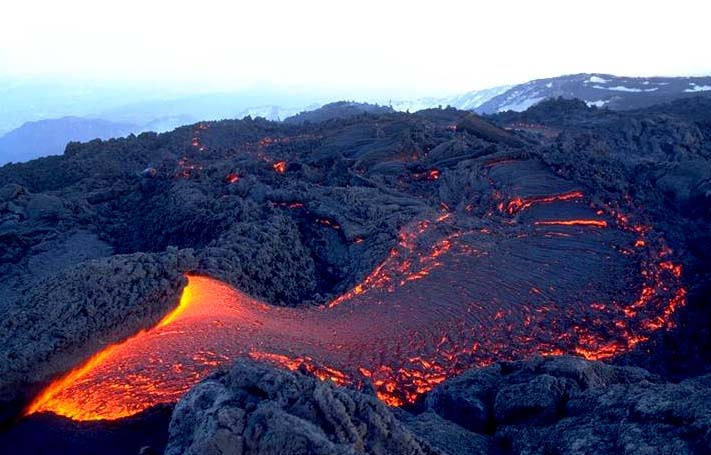
So, if you see the terms Mount Etna, Etna, Mongibello, Mongibello Etna, or Muncibbeddu, they generally point to the same great volcano.
Also read:Recyclatanteil: Meaning, Calculation, Recycled Content, and Why It Matters
Why Is the Name Mongibello Important?
The name Mongibello is important because it tells a story about Sicily before you even study the volcano itself.
Names often preserve history. A place can keep an old name long after the people who originally used it have disappeared. Mongibello is a linguistic record of the cultural contact that shaped Sicily.
The name also shows how strongly the mountain has been connected with local identity. Etna is not simply a geological object. It is part of the everyday landscape of eastern Sicily.
People have watched its smoke, lava, ash, and changing summit for generations. Farmers have worked its lower slopes. Travelers have climbed it. Scientists have studied it. Writers and artists have used it as an image of power and fire.
This helps explain why Mongibello remains a meaningful traditional name even though “Mount Etna” is the standard English name.
Where Is Mongibello Etna Located?
Mongibello Etna is located on the eastern side of Sicily, the largest island in the Mediterranean Sea.
The volcano rises near the city of Catania and is also connected with many towns and communities around its lower slopes. Its position makes it one of the most visible landmarks in eastern Sicily.
UNESCO’s World Heritage property covers 19,237 hectares of the higher, scientifically important part of the mountain. A much larger buffer zone surrounds the protected property.
Etna’s geographic position is important because the volcano sits within a complicated tectonic environment. Its activity is related to the movement and interaction of large crustal structures in the central Mediterranean.
This setting helps explain why Etna has remained active for such a long period.
How Old Is Mount Etna?
Mount Etna has a very long geological history.
UNESCO describes an eruptive history extending back around 500,000 years. However, the modern volcanic structure did not appear all at once. Etna developed through multiple volcanic phases and overlapping eruptive systems.
This is an important point because people sometimes imagine a volcano as a single cone that formed in one enormous event.
Etna is much more complicated.
Different volcanic centers developed at different times. Older volcanic structures were partly destroyed, buried, or reshaped by later eruptions. New lava flows accumulated over older rocks. Craters changed location and shape. Large collapses modified the mountain’s sides.
The result is a volcanic complex that is still evolving today.
Research on Etna’s volcanic history describes the younger volcanic structure as the Mongibello volcano. The last roughly 15,000 years of effusive activity played a major role in creating the structure recognized today.
The Geological Meaning of Mongibello
In volcanology, Mongibello can refer to the younger major volcanic edifice of Etna.
UNESCO’s geological documentation separates Etna’s volcanic history into several major units. These include older volcanic centers and the Ancient Mongibello and Recent Mongibello stages. The Recent Mongibello represents activity from roughly the late prehistoric period to the present.
This makes the term more than a traditional nickname.
In a geological context, Mongibello helps scientists describe a particular stage in the construction of Etna.
That distinction is useful because today’s Etna is the product of many generations of volcanic activity rather than a single eruption.
How Did Mongibello Etna Form?
The basic process begins deep below the Earth’s surface.
Magma is molten or partially molten rock that forms under high temperatures and pressures. When magma finds pathways through fractures and weaker zones in the Earth’s crust, it can move upward.
At Etna, the geological setting is especially complex. Regional fault systems provide structures that can help magma rise toward the surface. UNESCO’s geological documentation notes the importance of major fault systems crossing the area around the volcano.
When magma reaches the surface, it becomes lava.
Repeated eruptions then build the volcano.
Some eruptions produce lava flows that travel down the slopes. Other eruptions produce fragments of volcanic rock, ash, and gases. Explosive activity can build cones around vents. Over thousands of years, these materials accumulate and create the large volcanic landscape we see today.
The process is still happening.
That is one of the most important facts about Mongibello Etna.
The mountain is not a finished monument from the past. It is an active geological system.
Is Mongibello Etna Still Active?
Yes.
Etna is an active volcano, and volcanic activity continues to be carefully monitored.
As of August 21, 2026, the latest update from Italy’s National Institute of Geophysics and Volcanology, known as INGV, reported increased ash emission from the summit craters. The ash was forecast to disperse toward the southeast. INGV also reported that lava flows described in the previous day’s communication were no longer being fed.
The same update reported volcanic tremor at a medium level, with tremor sources near the Northeast Crater, and continuing medium-to-high infrasonic activity. GNSS measurements showed no significant changes at that time.
This illustrates an important point about volcanoes: activity can change quickly.
A volcano can move from quiet degassing to stronger explosive or effusive activity. Therefore, travelers should not assume that conditions are safe simply because Etna looks calm on a particular day.
For current conditions, official INGV notices and local authorities are more reliable than old travel articles or social media posts.
What Are the Main Craters of Etna?
Etna has several important summit craters.
The principal summit crater areas include:
- Northeast Crater
- Voragine Crater
- Bocca Nuova Crater
- Southeast Crater
These craters have changed over time, and their activity levels can differ.
The summit is not a simple hole at the top of a perfect cone. It is a complex area containing several volcanic vents and structures.
This is one reason the appearance of Etna changes so often.
A crater can grow through the accumulation of lava and volcanic fragments. It can collapse. New openings can form. Lava may flow from vents on the summit or from fractures lower down the mountain.
The 2024 eruptive sequence produced major morphological changes. Research presented at the 2026 European Geosciences Union General Assembly found that repeated lava effusion and pyroclastic deposition caused substantial growth around Voragine, establishing it as the new high point at about 3,403 meters above sea level.
This is an excellent example of why Etna’s height should not be treated as an absolutely permanent number.
How Tall Is Mongibello Etna?
The exact height of Etna can change because eruptions add new volcanic material while collapses and erosion remove material.
A 2026 scientific study reported the Voragine summit reaching about 3,403 meters above sea level following the 2024 volcanic sequence.
Older sources may give different numbers.
This is not necessarily an error.
Etna’s summit is constantly being reshaped by volcanic activity. INGV itself notes that the volcano’s elevation has changed repeatedly through its history.
This changing height is actually part of what makes Etna scientifically fascinating.
Most mountains are treated as relatively stable landforms. Etna is different. Its summit can literally be rebuilt by eruptions.
Why Is Etna Called a Stratovolcano?
Etna is generally classified as a stratovolcano, also called a composite volcano.
A stratovolcano develops through repeated eruptions that build layers of lava, ash, volcanic fragments, and other deposits.
Over long periods, these layers create a large and complex volcanic mountain.
Etna’s structure is not perfectly symmetrical because eruptions have occurred from different locations. Lava flows, cones, collapses, erosion, and landslides have all changed its shape.
This is why a photograph of Etna can look very different depending on where you stand.
The Valle del Bove and Mongibello Etna
One of the most spectacular features of Etna is the Valle del Bove.
This enormous depression dominates the eastern side of the volcano. It is one of the best places to understand the scale and complexity of Etna’s geological history.
Scientific research indicates that large landslides affected the eastern side of the Mongibello volcano around 9,200 years ago, contributing to the formation of the broad Valle del Bove depression.
Today, the valley exposes layers of volcanic material and provides scientists with a natural record of Etna’s past.
For visitors, it offers an entirely different view from the classic summit landscape.
Instead of seeing only a cone, travelers can see a huge amphitheater-like volcanic depression surrounded by steep walls.
Why Does Etna Erupt So Often?
Etna is famous for frequent volcanic activity.
Its magma supply and geological setting allow the volcano to remain active over long periods. Activity can include:
- Gas emissions
- Strombolian explosions
- Lava fountains
- Lava flows
- Ash emissions
- Summit eruptions
- Flank eruptions
- Earthquakes
- Ground deformation
Not every eruption is dramatic.
Sometimes the volcano mainly releases gases. At other times, explosive activity produces bright lava fountains that can be seen from communities around the mountain.
This range of behavior is one reason Etna is such an important scientific laboratory.
What Are Strombolian Eruptions?
Strombolian activity is a type of explosive volcanic activity.
It occurs when gas bubbles inside magma rise and burst, producing repeated explosions. At Etna, Strombolian activity can occur at summit craters and may become stronger during certain eruptive episodes.
The activity can sometimes develop into lava fountains, in which molten lava is thrown upward from a vent.
Etna has produced many spectacular lava fountains during its modern history.
However, photographs of these events can create the wrong impression that every eruption is extremely dangerous.
The reality is more complicated.
The level of risk depends on where the eruption is occurring, how explosive it is, whether lava is moving toward populated areas, weather conditions, and access restrictions.
What Makes Mongibello Etna Different From Other Volcanoes?
Etna has several qualities that make it unusually important.
First, it is very active.
Second, its eruptive history is exceptionally well documented.
Third, it is close to large human populations and important agricultural areas.
Fourth, its volcanic landscape is highly accessible compared with many remote volcanoes.
Fifth, the mountain contains an extraordinary variety of geological features.
UNESCO specifically highlights Etna’s summit craters, cinder cones, lava flows, lava caves, and Valle del Bove as important examples of volcanic landforms.
This combination of activity, accessibility, scientific importance, and cultural history makes Etna one of the world’s best-known volcanoes.
Mongibello Etna in Ancient Mythology
Etna has played an important role in mythology for thousands of years.
Ancient Greek traditions connected the mountain with the god Hephaestus, the divine blacksmith. Mythological stories also associated Etna with Typhon, a powerful monster who was said to have been trapped beneath the mountain.
These stories were attempts to explain a natural phenomenon that must have seemed extraordinary to ancient people.
Imagine living near Etna thousands of years ago.
You might see smoke rising from the summit. You might feel earthquakes. You might hear explosions at night. You might see red lava flowing down the mountain.
Without modern geology, it would be natural to interpret the mountain through religion and mythology.
In this way, Mongibello Etna became part of both the physical and imaginative landscape of Sicily.
Etna in Roman and Later History
The Romans also knew Etna well.
The volcano appeared in classical literature, poetry, and geographical writing. Later cultures continued to describe its eruptions and changes.
Over centuries, Etna became a symbol of Sicily itself.
Its presence influenced settlements, agriculture, roads, trade, art, literature, and tourism.
The mountain’s influence is therefore much wider than its physical footprint.
Why Is the Soil Around Etna So Fertile?
Volcanoes can destroy land, but they can also create fertile soils over time.
Volcanic rocks and ash contain minerals that weather into soil. Repeated volcanic deposits can eventually create productive agricultural land.
The lower slopes of Etna are known for vineyards, orchards, and other crops.
This creates an interesting contrast.
The same volcano that can produce destructive lava flows can also help support agriculture.
This is one of the great contradictions of volcanic landscapes: destruction and renewal happen together.
A lava flow may cover an area with dark rock, making it unusable for years or decades. But older volcanic materials can weather into rich soil that supports agriculture.
Etna Wine and Agriculture
The slopes of Etna are especially famous for vineyards.
The elevation, volcanic soils, sunlight, and local climate create different growing conditions across the mountain.
The volcanic landscape also creates many microclimates.
As elevation changes, temperature and rainfall can change. Slope direction also matters. These differences allow agricultural products to develop distinct characteristics.
For travelers, this means that an Etna trip does not have to be only about volcanoes.
It can also include vineyards, villages, food, forests, and local Sicilian culture.
The Natural Environment of Mongibello Etna
Etna contains several ecological zones.
At lower elevations, agricultural landscapes dominate many areas. Higher slopes become more forested or rocky. Near the summit, the environment becomes increasingly harsh.
Temperature falls with elevation, and volcanic terrain becomes more difficult for plants to colonize.
Yet life continues to adapt.
UNESCO recognizes the ecological importance of Etna and notes that the volcano provides a natural laboratory for studying ecological and biological processes.
This is another reason the mountain is scientifically valuable.
Scientists can study how plants and animals colonize new volcanic surfaces and how ecosystems recover after eruptions.
Why Is Mongibello Etna a UNESCO World Heritage Site?
Mount Etna became a UNESCO World Heritage Site in 2013.
The designation recognizes the volcano under natural criterion (viii), which concerns outstanding examples of Earth’s history and ongoing geological processes.
UNESCO emphasizes Etna’s continuing volcanic activity, its extensive record of eruptions, and its exceptional collection of volcanic landforms.
The protected World Heritage property covers 19,237 hectares.
Importantly, UNESCO did not designate Etna simply because it is beautiful.
The main reason is scientific and geological value.
Its eruptions provide an ongoing demonstration of how volcanic systems work.
Mongibello Etna as a Natural Laboratory
Calling Etna a natural laboratory is not just a colorful description.
Scientists can observe volcanic processes in real time.
They can measure:
- Earthquakes
- Volcanic tremor
- Gas emissions
- Ground deformation
- Thermal activity
- Lava movement
- Changes in crater shape
- New volcanic deposits
Modern instruments make this possible.
INGV operates extensive monitoring systems around Etna, including seismic stations, deformation measurements, and other surveillance tools. Its real-time volcano resources also provide access to selected seismic, thermal, and camera information.
This monitoring helps researchers understand the volcano and supports hazard assessment.
How Scientists Monitor Etna
Modern volcano monitoring uses many different technologies.
Seismometers detect earthquakes and volcanic tremor.
GNSS instruments can detect small movements of the ground.
Tiltmeters measure changes in the slope or angle of the ground.
Gas measurements can show changes in volcanic emissions.
Thermal satellites can identify hot areas associated with lava and other volcanic activity.
Webcams provide visual information.
Together, these systems create a much clearer picture than any single instrument could provide.
This is particularly important at Etna because the volcano can change quickly.
What Is Volcanic Tremor?
Volcanic tremor is a continuous or semi-continuous seismic signal associated with movement of fluids and magma within a volcanic system.
Scientists monitor changes in tremor because unusual changes can sometimes accompany changes in volcanic activity.
However, tremor should not be treated as a simple “eruption predictor.”
Volcano behavior is complex.
Scientists look at several signals together rather than relying on one measurement.
The August 21, 2026 INGV update, for example, discussed tremor, infrasonic activity, GNSS measurements, and crater activity together.
That multi-sensor approach is essential for responsible volcano monitoring.
What Is the Latest Mongibello Etna Activity?
As of August 21, 2026, Etna remained an actively monitored volcano.
INGV’s August 21 update reported increased ash emissions from the summit craters, with ash expected to disperse southeast. The lava flows described in the previous day’s communication were no longer being supplied.
INGV also reported medium-level volcanic tremor at the time of the update, while infrasonic activity remained at medium-to-high levels. The agency reported no significant changes in GNSS measurements.
The important lesson for travelers is simple: Etna’s condition can change, so current official notices should always be checked before visiting restricted or high-elevation areas.
Can Tourists Visit Mongibello Etna?
Yes, Etna is one of Sicily’s major tourist attractions.
People visit the mountain for hiking, sightseeing, photography, geology, skiing in suitable seasons, and guided excursions.
However, visiting an active volcano is different from visiting an ordinary mountain.
Access rules can change when volcanic activity increases.
Some areas may be closed. Certain routes may require authorized guides. Weather can also create serious risks, especially near the summit.
For this reason, visitors should follow official restrictions rather than trying to reach a location simply because it appears accessible online.
The Best Ways to Experience Mongibello Etna
There is no single “best” Etna experience.
Different travelers may prefer different parts of the mountain.
Guided Volcano Excursions
A guided excursion is a strong option for first-time visitors.
A knowledgeable guide can explain the geology, identify volcanic features, and help visitors understand local restrictions.
Guided trips can also make the experience easier for travelers who are unfamiliar with mountain terrain.
Hiking
Hiking allows visitors to experience the changing landscape at a slower pace.
Lower routes can pass through forests and older volcanic cones. Higher routes may enter increasingly barren landscapes.
The contrast between green vegetation and black lava is one of Etna’s most memorable visual features.
Cable Car and Higher-Elevation Access
The southern side of Etna has developed tourism infrastructure, including a cableway and other facilities. UNESCO notes that tourism zones in the wider protected landscape include accommodation, restaurants, parking areas, a cableway, lifts, information points, and other visitor infrastructure.
Availability can change with weather and volcanic conditions.
Valle del Bove
The Valle del Bove is particularly valuable for visitors interested in geology.
It gives a sense of the scale of Etna’s volcanic history and shows how landslides and eruptions have reshaped the mountain.
What Should You Wear on Etna?
Even during warm weather in Sicily, high elevations can be cold and windy.
Also read:Merfez: Meaning, Origins, Home Design, Textiles, and Modern Uses
Travelers should think in layers.
Useful items can include:
- Sturdy walking shoes
- Warm layers
- A wind-resistant jacket
- Sun protection
- Water
- Snacks
- Sunglasses
- A small backpack
The correct clothing depends strongly on elevation, season, weather, and the type of excursion.
A sunny day in Catania does not guarantee comfortable conditions near the summit.
Is Mongibello Etna Dangerous?
Etna is an active volcano, so there are genuine hazards.
Potential hazards include:
- Lava flows
- Falling volcanic rocks
- Ash
- Explosive activity
- Volcanic gases
- Earthquakes
- Sudden changes in weather
- Loose volcanic terrain
- Steep slopes
- Poor visibility
But risk is not the same everywhere on the mountain.
Most visitors never approach the most hazardous areas.
Tourism is managed through access rules, monitoring, warnings, and restrictions.
The safest approach is to respect closures and official instructions.
Do not cross barriers simply to get a closer photograph.
A volcano can look calm while dangerous processes are occurring nearby.
Why Etna Can Be Beautiful and Dangerous at the Same Time
One of the most important insights about Mongibello Etna is that its beauty comes partly from the same processes that create its danger.
Lava creates new land.
Ash creates fertile soil.
Eruptions build cones.
Volcanic gases reveal activity deep underground.
Crater growth creates dramatic landscapes.
At the same time, lava can destroy property, ash can affect air quality and aviation, and explosive activity can make summit areas hazardous.
This dual nature is what makes Etna so powerful as a natural symbol.
It represents creation and destruction at the same time.
Mongibello Etna and Local Communities
Etna is closely connected with the communities around it.
Towns and villages have developed on its slopes and nearby plains.
People live with the volcano as part of their daily environment.
This relationship requires a balance between appreciation and caution.
Residents benefit from fertile agricultural land and tourism, but they also live with volcanic hazards.
This is one reason Etna’s monitoring network is so important.
The goal is not simply to predict spectacular eruptions for tourists. Scientific monitoring helps improve understanding of hazards that can affect real communities.
Why Etna Matters to Catania
Catania is one of the major cities associated with Etna.
The volcano dominates the city’s surrounding landscape and has influenced its history.
The relationship between Catania and Etna is complex.
The mountain attracts visitors and contributes to regional agriculture and tourism, while eruptions and earthquakes have also caused disruption throughout history.
This creates a strong regional identity centered around the volcano.
Mongibello Etna in Art and Literature
Etna has inspired writers, poets, painters, photographers, and filmmakers.
Its dramatic combination of fire, smoke, snow, black rock, and Mediterranean landscapes makes it a natural artistic subject.
The traditional name Mongibello also appears in Italian literary history.
Treccani notes that Mongibello has been used not only as a proper name for Etna but also metaphorically in literature to describe intense flames, sudden burning, strong passions, or an impulsive person.
That metaphor makes sense.
Mongibello became a symbol of something powerful that can suddenly burst into action.
Why the Name “Mongibello” Sounds Repetitive
At first glance, “Mongibello” may sound unusual.
The reason is linguistic.
The word combines terms that both relate to “mountain.”
The result is essentially a repetition of the same idea.
This type of place-name formation is sometimes called a tautological name.
It can happen when speakers of one language adopt a place name from another language without realizing that the older word already means the same thing as the new word.
Mongibello therefore carries a small piece of Sicily’s multilingual history.
Mongibello Etna vs. Mount Etna
The difference is mainly one of naming and context.
| Term | Meaning |
| Mount Etna | Standard English name |
| Etna | Short form commonly used in English |
| Mongibello | Traditional name for Etna |
| Mongibello Etna | Search phrase combining the traditional and modern names |
| Muncibbeddu | Sicilian form |
| A Muntagna | Sicilian expression meaning “the mountain” |
For general writing, “Mount Etna” is usually the clearest term for an English-speaking audience.
“Mongibello” is valuable when discussing history, language, culture, or the traditional identity of the volcano.
Why People Search for “Mongibello Etna”
The search phrase Mongibello Etna can come from several different intentions.
Some people want to know whether Mongibello is another volcano.
Others may have seen the name in travel content.
Some are interested in the meaning of the word.
Others may be researching Etna’s geological history.
There is also a cultural reason for the search.
Traditional names can reveal information that the modern name does not immediately communicate.
Someone searching Mongibello Etna may therefore be looking for a deeper understanding of the mountain rather than just a basic travel guide.
What Is the Difference Between Etna and Mongibello?
There is no separate Mongibello volcano next to Etna.
Mongibello is a traditional name for Mount Etna.
In geology, Mongibello can also refer to the younger volcanic edifice or phase of Etna’s development.
This distinction matters.
In everyday language, Mongibello means Etna.
In scientific literature, the term may have a more specific geological meaning depending on the context.
Why Etna Keeps Changing Shape
Etna changes because it is active.
During an eruption, lava and pyroclastic material can accumulate around a crater.
A crater may become taller.
Another crater may collapse.
A lava flow may create a new surface.
A landslide can remove part of a slope.
Erosion can gradually wear down older formations.
The 2024 activity provided a striking example of this process. Scientific analysis found major accumulation around Voragine and measured the new summit elevation at approximately 3,403 meters.
In other words, the mountain is still under construction.
The Role of Satellite Technology
Modern satellite technology has transformed volcano research.
Scientists can compare images taken at different times to identify changes in crater shape, lava flows, thermal activity, and volcanic deposits.
INGV has also developed satellite-based datasets for studying Etna’s eruptions. A 2025 INGV publication described an open-access archive of satellite data covering the February 2025 eruption and combining observations from several satellite systems.
This technology allows scientists to observe areas that may be too dangerous to enter during an eruption.
It also creates a detailed historical record.
What Can Mongibello Etna Teach Us About Earth?
Etna helps scientists understand how our planet changes.
Volcanoes are windows into processes occurring deep beneath Earth’s surface.
By studying lava chemistry, earthquakes, gases, ground movement, and eruption patterns, researchers can learn more about magma movement and volcanic systems.
Etna is especially useful because its activity is frequent and its monitoring network is extensive.
The volcano therefore provides a rare opportunity to study geology as it happens.
What Makes the Mongibello Etna Landscape So Special?
The landscape around Etna can change dramatically over short distances.
A visitor might see:
- Green forests
- Vineyards
- Fruit orchards
- Old lava fields
- Black volcanic sand
- Red volcanic cones
- Deep valleys
- Snow
- Fresh lava
- Smoke rising from summit craters
- Views toward the Mediterranean Sea
This variety makes Etna different from many conventional mountain destinations.
It is not simply a high peak.
It is an entire volcanic environment.
When Is the Best Time to Visit Etna?
The best time depends on what you want to do.
Spring can offer comfortable hiking conditions at lower elevations.
Summer generally provides longer daylight and easier access, although high areas can still have strong winds and changing weather.
Autumn can offer cooler conditions and beautiful landscapes.
Winter can transform the upper mountain into a snowy volcanic environment, but access may be affected by snow, wind, weather, and volcanic conditions.
There is no universal best month.
The more important rule is to check current conditions and access restrictions shortly before traveling.
Is Etna Worth Visiting?
For most travelers interested in nature, geology, culture, or photography, Etna offers an unusually rich experience.
It combines several things that are difficult to find together:
A major active volcano.
A UNESCO World Heritage Site.
A landscape with thousands of years of geological history.
A living cultural symbol.
A productive agricultural region.
A place where modern science and ancient mythology meet.
That combination is what makes Mongibello Etna more interesting than simply another mountain on a travel map.
A Better Way to Understand Mongibello Etna
The easiest mistake is to think of Etna only as a tourist attraction.
A deeper interpretation is to see it as a living system.
Its shape changes.
Its summit changes.
Its eruptions change.
Its ecosystems recover.
Its communities adapt.
Its scientific understanding continues to improve.
Its name itself preserves cultural history.
That makes Mongibello Etna a powerful example of how nature, language, history, science, and human life can become connected around a single landscape.
Key Facts About Mongibello Etna
Here are the most important facts in simple form:
| Fact | Information |
| Traditional name | Mongibello |
| Modern English name | Mount Etna |
| Location | Eastern Sicily, Italy |
| Volcano type | Stratovolcano |
| Status | Active |
| Geological history | About 500,000 years |
| Recorded human volcanic history | At least 2,700 years |
| UNESCO status | World Heritage Site since 2013 |
| Major summit craters | Northeast, Voragine, Bocca Nuova, Southeast |
| Famous geological feature | Valle del Bove |
| Major activity types | Effusive and Strombolian |
| Local Sicilian names | Muncibbeddu, A Muntagna |
| Approximate recent summit elevation | About 3,403 m, based on post-2024 measurements |
| Main monitoring organization | INGV |
UNESCO confirms the volcano’s exceptional activity and long geological and historical record, while recent scientific work documents major changes to the summit after the 2024 eruptive sequence.
Common Misunderstandings About Mongibello Etna
Mongibello is a separate mountain
It is not. Mongibello is a traditional name associated with Mount Etna.
Etna is an extinct volcano
It is not. Etna is active and continues to produce volcanic activity.
The height of Etna never changes
It changes over time because eruptions can build new material while collapses and erosion remove it.
Every eruption means the entire mountain is dangerous
Not necessarily. Hazards vary by location and activity level, which is why official access rules are important.
Mongibello is only a poetic nickname
It is more than that. The term has linguistic, cultural, historical, and geological significance.
Why Mongibello Etna Still Matters Today
Mongibello Etna matters because it connects the past with the present.
Its name preserves the history of different cultures.
Its rocks preserve the history of volcanic activity.
Its landscape records eruptions, landslides, erosion, and ecological recovery.
Its fertile slopes support agriculture.
Its beauty supports tourism.
Its activity supports scientific research.
And its hazards remind people that Earth is not a completely static planet.
Etna shows that mountains can still be built, reshaped, and destroyed by natural processes.
That is perhaps the most important lesson of Mongibello Etna.
Final Thoughts
Mongibello Etna is much more than an alternative name for Mount Etna. It represents a volcano with a remarkable geological history, a deep connection to Sicilian culture, and a continuing role in modern science. The name itself reflects the mixed linguistic history of Sicily, while the mountain represents one of Europe’s most active and closely studied volcanic systems. From its changing summit and ancient lava fields to the Valle del Bove, fertile vineyards, local communities, mythology, and modern monitoring stations, Etna offers a rare view of Earth as a living and changing planet. For travelers, researchers, and anyone curious about volcanoes, understanding Mongibello means understanding Etna not as a static mountain, but as a landscape that is still being created today. Current conditions should always be checked through official volcano monitoring and local authorities because activity can change rapidly.
FAQs About Mongibello Etna
Is Mongibello another name for Mount Etna?
Yes. Mongibello is a traditional name for Mount Etna. The name has Italian and Arabic linguistic roots and essentially combines words meaning “mountain.”
What does Mongibello mean?
Mongibello comes from a combination of the Italian monte and the Arabic jabal or gebel, both referring to a mountain. The result is essentially a repeated “mountain” meaning.
Is Mongibello Etna an active volcano?
Yes. Mongibello refers to Mount Etna, which remains an active volcano. INGV continues to monitor its seismic, thermal, gas, deformation, and eruptive activity.
Can the height of Mongibello Etna change?
Yes. Etna’s height can change because eruptions add lava and pyroclastic material, while collapses and erosion can reduce elevation. Scientific measurements following the 2024 eruptions placed the Voragine summit at about 3,403 meters above sea level.
Is Mongibello Etna part of a UNESCO World Heritage Site?
Yes. Mount Etna was added to the UNESCO World Heritage List in 2013 because of its outstanding geological importance and continuing volcanic activity.