Merfez: Meaning, Origins, Home Design, Textiles, and Modern Uses
Merfez is a term that has recently attracted attention online, especially in discussions about home décor, handmade textiles, interior design, creativity, and intentional living. However, one reason the word can be confusing is that merfez does not have one universally accepted definition in English.
Some recent online descriptions connect merfez with handcrafted textiles and warm, character-filled interiors. Other discussions use the term more broadly to describe a design idea centered on meaningful objects, natural materials, craftsmanship, and spaces that feel personal rather than mass-produced. At the same time, the proposed linguistic connection between merfez and the Turkish word merkez should be treated carefully. Turkish dictionaries identify merkez as meaning “center,” “headquarters,” “core,” or “hub,” but that does not by itself prove that merfez is an established Turkish word or a historically documented textile term.
That distinction is important for anyone searching for merfez. Rather than presenting every claim found online as established fact, it is more useful to understand the term as an emerging or flexible concept whose meaning depends on context.
In the world of home design, merfez is commonly associated with handmade-looking or artisanal textiles, including rugs, throws, cushions, woven fabrics, and decorative pieces. The style often emphasizes texture, warmth, natural materials, visible craftsmanship, and subtle imperfections. These characteristics fit well with the growing interest in comfortable, personal interiors rather than highly uniform spaces.
This guide explains what merfez means, where the term may come from, how it is used in home design, what makes the style distinctive, how to decorate with merfez-inspired pieces, and what shoppers should consider before buying handmade textiles.
What Is Merfez?
Merfez is best understood as a flexible modern term rather than a traditional English dictionary word with one fixed definition.
In current online discussions, merfez is strongly associated with artisanal home textiles and an interior design approach that values warmth, texture, craftsmanship, and individuality. Several recent descriptions present merfez as a concept connected to handmade textiles and thoughtful home environments.
The idea can include items such as:
- Handwoven rugs
- Decorative throws
- Woven blankets
- Textured cushions
- Wall hangings
- Fabric art
- Natural-fiber textiles
- Handmade decorative objects
- Rustic or contemporary textile accents
The important point is that merfez is not simply another word for a rug or blanket. Its meaning is broader when used in interior design. It describes the feeling and philosophy behind choosing objects that add warmth, texture, history, and personality to a space.
A useful way to think about merfez is this: instead of asking only whether an object looks attractive, the merfez approach asks whether the object makes the room feel more comfortable, meaningful, and lived in.
That is one reason the term has become interesting to people who are moving away from highly manufactured or overly coordinated décor.
The Possible Origin of the Word Merfez
The origin of merfez requires some caution.
A number of recent articles suggest that merfez may have roots in the Turkish word merkez, which means center or hub.
The Turkish word merkez is well established. Turkish-English dictionaries translate it as “center,” “centre,” “headquarters,” “core,” and “hub,” depending on context.
Historical linguistic information also connects Turkish merkez to Ottoman Turkish and ultimately to Arabic markaz, a word associated with a center or place.
However, there is an important difference between saying that merfez may have been inspired by merkez and saying that merfez is a standard Turkish word. The available evidence does not establish that merfez itself is an ordinary Turkish dictionary term meaning handcrafted textile or interior design.
For SEO content and general readers, this distinction matters because online articles can quickly repeat an uncertain claim until it appears to be a proven historical fact.
A more responsible interpretation is that modern uses of merfez may be inspired by the broader idea of a center, hub, or focal point. In home design, that idea makes intuitive sense. A carefully chosen rug can become the visual center of a living room. A handmade textile can become the emotional center of a cozy corner. A gathering space can become the heart of a home.
So the possible connection between merkez and merfez is interesting, but it should be presented as a possible influence rather than a confirmed etymology.
What Does Merkez Mean?
Understanding merkez helps explain why some writers connect the concept with the idea of a central or meaningful space.
In Turkish, merkez can refer to a physical center, a central location, a headquarters, or a hub. It can also describe something that is at the core of an activity or idea.
For example, a city center is a central area of a city. A business headquarters can also be described using merkez. The word can therefore carry both a physical and conceptual meaning.
This creates an interesting connection with modern interior design.
A home is not simply a collection of furniture. The most successful rooms often have a visual or emotional center. It might be a fireplace, dining table, large rug, artwork, or seating area.
If merfez is understood through this conceptual lens, its appeal becomes easier to explain. It can represent the idea of bringing meaningful objects toward the center of everyday life.
Still, it is important not to confuse this interpretation with a formal dictionary definition.
Merfez and Handmade Textiles
The strongest current online association with merfez is handmade and artisanal textiles.
These textiles are attractive because they often have a quality that mass-produced products struggle to reproduce: visible individuality.
A factory-made blanket may look exactly like thousands of other blankets. A handmade textile can show small variations in stitching, weaving, thickness, color, or texture.
Those variations are not necessarily defects.
In many cases, they are evidence of the production process.
This is especially important in a time when consumers can easily buy inexpensive décor that looks similar from one home to another. Handmade pieces offer an alternative. They can make a room feel collected over time instead of decorated from one catalog.
Recent descriptions of merfez emphasize this connection between handcrafted production, texture, warmth, and individuality.
Common Merfez Textile Types
Merfez-inspired interiors can include many different textile products. There is no single official product category, so the term can describe an overall design character rather than a standardized manufacturing method.
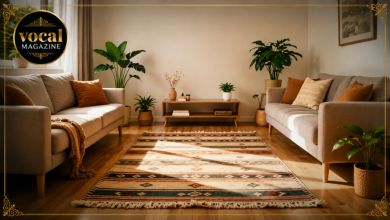
Merfez Rugs
Rugs are one of the easiest ways to introduce a merfez-inspired look into a room.
A textured rug can visually connect furniture and help establish the room’s main area. In a living room, for example, the rug can sit beneath the coffee table and front legs of a sofa and chairs.
The result is a more unified seating area.
Some online descriptions associate merfez rugs with flat weaves, low piles, geometric patterns, earthy colors, and handmade appearances.
However, buyers should not assume that every rug marketed as merfez has those exact characteristics. Because the term is not a standardized rug classification, the actual material, construction, origin, and quality should always be checked separately.
Merfez Throws
Throws can add warmth without changing an entire room.
A textured throw placed over the arm of a sofa can make a space look softer and more relaxed. It can also provide practical comfort during cooler evenings.
For a simple American home, a neutral merfez-style throw can work with many existing colors.
Cream, beige, soft brown, gray, muted green, and natural fiber tones are especially easy to combine.
Merfez Cushions
Cushions provide a simple way to experiment with texture.
Instead of buying a complete set of matching cushions, homeowners can combine different materials and patterns.
For example, a linen cushion can be paired with a woven cushion and a lightly patterned textile. The goal is not perfect matching. The goal is visual balance.
Merfez Wall Hangings
Decorative textiles can also function as wall art.
A woven wall hanging can introduce softness into a room that already contains hard surfaces such as wood, glass, metal, or stone.
This can be especially useful in bedrooms, reading areas, home offices, and entryways.
Merfez Blankets
Blankets are another practical option.
A handmade or artisanal blanket can combine decoration and function. It can remain folded on a chair, placed at the end of a bed, or kept in a basket for regular use.
This supports one of the central ideas associated with merfez: décor should not only look good but should also participate in everyday life.
What Makes the Merfez Style Different?
The merfez style is less about one particular pattern and more about a collection of design choices.
Several characteristics appear repeatedly in current descriptions of the concept.
Texture
Texture is perhaps the most important feature.
A room with flat surfaces everywhere can sometimes feel cold. Adding woven materials, wool, linen, cotton, wood, clay, or other tactile materials can create depth.
Texture also changes how a room feels without requiring dramatic colors.
This is useful for people who prefer neutral interiors.
A beige room does not have to look boring if it includes several layers of texture.
Natural Materials
Natural materials are often connected with merfez-inspired interiors.
Common examples include:
- Cotton
- Linen
- Wool
- Wood
- Clay
- Stone
- Jute
- Woven fibers
Natural materials can create visual variation because they do not always have perfectly uniform surfaces.
However, “natural” should not automatically be treated as a guarantee of high quality or sustainability. Consumers should still check material labels, manufacturing information, and care instructions.
Handmade Character
The handmade appearance is another major feature.
Small differences can give a textile personality.
A slightly irregular weave may make an object feel more authentic. A visible stitch or variation in color can communicate craftsmanship.
This does not mean every imperfect product is valuable. Quality still matters.
A good handmade piece should be structurally sound, appropriately finished, and suitable for its intended use.
Warm Colors
Many merfez-inspired interiors use warm or muted colors.
Examples include:
- Cream
- Sand
- Beige
- Terracotta
- Rust
- Brown
- Warm gray
- Muted green
- Soft black
These colors can create a calm environment without making the room visually empty.
Simplicity
Merfez does not require a crowded room.
In fact, a small number of carefully selected pieces can have a stronger effect than many decorative objects.
A single textured rug may do more for a room than ten small accessories.
This makes the concept useful for people who enjoy minimalist interiors but still want their homes to feel comfortable and personal.
Merfez and Modern Interior Design
One reason merfez works well in modern homes is that modern design can sometimes become too visually hard.
Smooth furniture, polished surfaces, straight lines, and neutral colors can create a sophisticated look, but too much uniformity may make a room feel impersonal.
Textiles solve this problem.
A woven rug introduces softness.
A linen curtain adds movement.
A wool throw adds warmth.
A textured cushion creates a small visual contrast.
The result is a modern room that still feels comfortable.
This is why merfez-inspired design can work with contemporary, minimalist, rustic, Scandinavian, bohemian, and transitional interiors.
The concept is flexible because it focuses more on materials and atmosphere than on a strict decorative rulebook.
How to Use Merfez in a Living Room
The living room is one of the easiest places to introduce merfez.
Start with one large textile.
A rug is often the best choice because it can define the main seating area.
If the room already has a strong rug, consider a throw or cushions instead.
Avoid adding too many competing patterns.
For example, a neutral sofa can support a textured rug, woven cushions, and a simple throw. If every piece has a strong pattern, the room can become visually busy.
The goal is balance.
A useful approach is to combine:
- One main texture
- One supporting texture
- One subtle pattern
- Several simple surfaces
This creates interest without overwhelming the room.
Using Merfez in the Bedroom
Bedrooms benefit from softness.
A textured blanket at the foot of the bed can immediately make the room feel more inviting.
Layering is also useful.
A simple bedding set can be combined with a woven throw and two or three cushions in different but related textures.
Keep the color palette controlled.
For a calm bedroom, cream, beige, warm white, light brown, and muted green can work well together.
The result should feel restful rather than heavily decorated.
Using Merfez in a Home Office
Home offices are often dominated by desks, screens, cables, and hard surfaces.
Textiles can soften this environment.
A small woven rug can define the workspace. A textile wall hanging can add personality without taking up desk space. A cushion can make a reading chair more comfortable.
This approach can make a home office feel more like part of the home instead of a temporary work station.
Using Merfez in Small Apartments
Small spaces can benefit from merfez-inspired design because texture does not necessarily require additional furniture.
A large decorative cabinet takes up physical space.
A throw does not.
A wall textile can add visual interest without using floor area.
A small rug can define a seating area without creating visual clutter.
For apartments, choose versatile pieces that can serve more than one purpose.
A woven blanket can be decorative during the day and functional at night.
A textile basket can store items while contributing to the room’s appearance.
This is where the concept becomes practical rather than purely aesthetic.
Merfez and the Idea of Intentional Living
Another modern interpretation of merfez connects the term with intentional living.
This does not mean owning as few objects as possible.
Instead, it means choosing objects carefully.
A home can contain books, artwork, furniture, souvenirs, plants, textiles, and family items without becoming minimalist.
The important question is whether those objects contribute something meaningful.
Recent discussions of the merfez concept emphasize this idea of choosing things because they improve the way people actually live rather than simply following trends.
Also read:Hart Violet Braun: Biography, Age, Parents, Family, and What We Know
This interpretation makes merfez broader than interior decoration.
It becomes a way of thinking about the relationship between people and their surroundings.
Merfez Versus Mass-Produced Décor
Mass-produced décor has clear advantages.
It is often affordable, easy to replace, widely available, and consistent in appearance.
There is nothing inherently wrong with buying factory-made products.
The difference is that handmade and artisanal pieces can offer qualities that mass production does not always provide.
These may include:
- Individual variation
- Visible craftsmanship
- Traditional techniques
- Unique textures
- A stronger sense of character
- A longer emotional connection with the object
The best approach is not to reject mass-produced products completely.
Instead, homeowners can mix practical everyday products with a few meaningful artisanal pieces.
This creates a realistic home rather than an artificial showroom.
Is Merfez a Specific Brand?
Online references to merfez can sometimes make it appear as though the term refers to one clearly established company.
That is not necessarily the case.
Some websites describe Merfez as a textile brand focused on handcrafted home products, while other articles use Merfez as a broader design concept.
Because the name is being used in different ways online, readers should check the context before assuming that every mention refers to the same company.
If you are shopping for a product labeled Merfez, look for the actual seller, product description, materials, dimensions, country of origin, return policy, and care instructions.
A name alone does not establish product quality.
How to Choose a Merfez-Inspired Textile
If you want to bring this style into your home, start with function.
Ask where the textile will be used.
A decorative wall hanging has different requirements from a rug in a high-traffic hallway.
A bedroom throw has different requirements from a blanket that will be washed every week.
Then consider material.
Cotton may be practical for many everyday uses.
Wool can offer warmth and texture.
Linen has a relaxed appearance.
Jute and other natural fibers can create a rustic look.
But each material has different care requirements.
Always read the product specifications before purchasing.
Check the Construction
A beautiful photograph does not tell you everything about a textile.
Look closely at construction details.
For rugs, consider:
- Weave type
- Pile height
- Backing
- Edge finishing
- Fiber content
- Intended traffic level
For blankets and throws, consider:
- Fiber content
- Stitch quality
- Weight
- Washing instructions
- Shrinkage information
- Whether the fabric sheds
These details help separate genuine quality from attractive marketing.
Understand Handmade Claims
The word “handmade” can have different meanings.
Some products may be completely handwoven.
Others may be machine-made and finished by hand.
Some may use traditional designs but modern manufacturing.
None of these automatically makes a product bad.
The important thing is transparency.
A trustworthy seller should explain what is handmade, where the product was made, what materials were used, and how it should be cared for.
That is a stronger indicator of trustworthiness than the word handmade by itself.
Merfez and Sustainability
The interest in artisanal textiles is also connected to broader consumer interest in buying fewer, better-considered products.
A durable textile that stays in a home for many years may reduce the need for frequent replacement.
However, it is important not to make automatic environmental claims.
Handmade does not always mean sustainable.
Natural fibers are not automatically low-impact.
Imported products can involve transportation and packaging.
Responsible shopping requires looking at the full product story.
Consumers can ask:
- How long is the product expected to last?
- What is it made from?
- Where was it produced?
- Can it be repaired?
- Can it be washed without special chemicals?
- Is the seller transparent about manufacturing?
These questions provide more useful information than a simple sustainability label.
How to Mix Merfez With Other Styles
Merfez does not have to dominate an entire home.
It can be used as an accent.
With Minimalist Design
Use one or two textured pieces against clean furniture.
A woven rug and linen throw may be enough.
With Bohemian Design
Layer different textiles and natural materials.
Patterns can be stronger, but keep some neutral space to prevent the room from feeling crowded.
With Rustic Design
Combine woven textiles with wood, stone, aged metal, and earthy colors.
This creates a natural, comfortable atmosphere.
With Modern Design
Use texture to soften clean lines.
A neutral handmade-looking rug can work especially well with modern furniture.
With Scandinavian Design
Choose simple patterns, light colors, natural fibers, and understated textures.
The result can remain clean while gaining warmth.
Common Merfez Color Palettes
There is no official merfez color chart.
Still, the style is often associated with natural and muted tones.
A simple palette might include warm white, sand, beige, brown, and soft gray.
Another option is to add terracotta or rust.
For a slightly richer look, muted olive or deep charcoal can provide contrast.
The safest approach is to choose a main neutral color and add one or two supporting shades.
This keeps the room cohesive.
Merfez Patterns and Designs
Patterns can vary widely.
Geometric shapes are often associated with artisanal textile design because they can be created through traditional weaving techniques.
Stripes can also work well.
Small repeating motifs can add interest without becoming overwhelming.
The key is not to search for one “official” merfez pattern.
There is no reliable evidence that merfez represents one standardized pattern system.
Instead, look for the qualities that define the overall style: texture, craftsmanship, warmth, natural character, and visual balance.
Why Imperfection Can Be Beautiful
One of the most interesting ideas connected with merfez is the acceptance of imperfection.
Modern manufacturing is built around consistency.
Every product is expected to look like the next one.
Handmade objects are different.
A small variation may show that a person made or finished the piece.
This can create emotional value.
A slightly uneven ceramic bowl may remind someone of where it was purchased.
A handmade blanket may become associated with a favorite chair.
A rug may develop a history as a family uses it over many years.
These details can make a home feel personal.
The goal is not poor workmanship.
The goal is character within acceptable quality.
Merfez as a Focal Point
The possible connection between merfez and the idea of a center or hub creates an interesting design principle.
Every room benefits from a focal point.
It does not need to be dramatic.
In a living room, the focal point might be a rug.
In a bedroom, it might be the bed.
In a dining room, it might be the table.
In a reading corner, it might be a chair and lamp.
Textiles can help establish these focal points without expensive renovations.
A well-chosen rug can visually anchor furniture.
A wall hanging can draw attention to an otherwise empty wall.
A patterned throw can create a small point of contrast.
This makes textiles powerful design tools.
How to Care for Merfez Textiles
Care depends entirely on the material and construction.
Also read:Crypings Com: What It Is, What It Covers, Features, Safety, and How to Use It
Do not assume that every artisanal textile should be washed in the same way.
Check the manufacturer’s instructions first.
For rugs, regular vacuuming may be appropriate, but the exact method depends on the fiber and construction.
For wool, avoid harsh treatment unless the care instructions specifically allow it.
For delicate woven pieces, aggressive washing can damage fibers or change the shape.
Sunlight can also affect some dyes.
If a textile is expensive or especially delicate, professional cleaning may be safer than experimenting at home.
Proper care can significantly extend the useful life of a textile.
Common Mistakes When Using Merfez Style
The first mistake is using too many textures.
Texture creates interest, but too much can make a room feel chaotic.
The second mistake is choosing everything in exactly the same color.
A natural palette can still have contrast.
The third mistake is buying décor without considering function.
A beautiful rug that is difficult to clean may not be practical for a busy household.
The fourth mistake is assuming handmade always means premium quality.
Inspect the product carefully.
The fifth mistake is treating merfez as a strict decorating rule.
It is better understood as a flexible design direction.
Your home should still reflect your own lifestyle.
Is Merfez a Design Trend or a Long-Term Style?
This is an important question.
Some décor trends disappear quickly because they depend on a particular color or visual gimmick.
The principles associated with merfez are more durable.
Natural materials, comfortable textiles, thoughtful decoration, craftsmanship, and personal objects have existed in interior design for generations.
That makes the broader concept less dependent on a single trend.
A particular merfez pattern may become fashionable and later disappear.
But the underlying preference for comfortable, meaningful, tactile spaces is unlikely to vanish.
That is why it may be more useful to think of merfez as a design philosophy or aesthetic direction rather than a temporary trend.
Why Merfez Is Appealing to Modern Homeowners
Modern consumers have access to an enormous amount of home décor.
That abundance creates a strange problem.
When everything is available, it can become difficult to create a home that feels personal.
Artisanal textiles offer one solution.
They introduce variation.
They also create opportunities to choose objects based on material, craftsmanship, story, or emotional value.
This is especially appealing to people who want their homes to feel comfortable rather than perfectly staged.
Merfez fits that desire because it places attention on how a room feels, not just how it photographs.
Merfez and the Psychology of Comfortable Spaces
Interior design is not only visual.
Texture, color, lighting, sound, and organization all affect how people experience a room.
Soft textiles can make hard rooms feel more comfortable.
Warm colors can create a more intimate atmosphere.
Natural materials can add visual variation.
Personal objects can create familiarity.
This does not mean a merfez-inspired room automatically improves mental health or well-being. Such claims would require stronger evidence.
A more reasonable conclusion is that thoughtful environmental design can influence comfort and perception, and textiles are one practical tool for shaping that experience.
How to Create a Merfez-Inspired Home on a Budget
You do not need to redesign an entire house.
Start small.
Replace one synthetic-looking throw with a textured natural-fiber option.
Add a secondhand woven rug.
Use a handmade cushion.
Display a textile from a meaningful trip.
Move unnecessary decorations out of the room.
Add one natural material at a time.
The most effective design changes are often simple.
A room can become warmer without becoming expensive.
Merfez for Renters
Renters can also use the style.
Textiles are especially useful because they usually do not require permanent changes.
A rug can change the feeling of a room without altering the floor.
Curtains can soften windows.
Throws and cushions can update a sofa.
Wall textiles can provide decoration without permanent construction, depending on the rental agreement and hanging method.
This makes merfez-inspired décor accessible to people who cannot renovate their homes.
Merfez and American Home Design
For a US audience, merfez can be adapted to many common home styles.
It can work in an apartment in New York, a suburban home in Texas, a craftsman house in Oregon, or a modern condominium in California.
The concept does not depend on a particular architecture.
Instead, it depends on how materials are combined.
American interiors often mix different influences. A family room may contain modern furniture, vintage objects, photographs, books, and handmade textiles.
Merfez fits naturally into this kind of collected environment.
What to Look for When Shopping Online
When buying a merfez-style product online, do not rely only on photographs.
Read the description carefully.
Look for:
- Exact dimensions
- Material composition
- Country of manufacture
- Construction method
- Care instructions
- Return policy
- Customer reviews
- Product photographs from different angles
If the seller makes claims about being handmade, sustainable, traditional, or ethically produced, look for details supporting those claims.
Good product information should answer basic questions before you buy.
The Future of Merfez
The future of merfez will likely depend on how the term develops online.
Because it is still used inconsistently, its meaning may become clearer over time or continue to evolve.
One possibility is that merfez will remain a loose term for artisanal home textiles and intentional interiors.
Another is that specific brands may adopt the name and give it their own definitions.
It is also possible that the word will become associated with a broader lifestyle idea centered on meaningful spaces and craftsmanship.
For now, the safest interpretation is flexible.
Merfez is an emerging term whose modern online usage frequently points toward handcrafted textiles, tactile interiors, and thoughtful decoration, while its proposed connection to the Turkish merkez should be described as a possibility rather than an established linguistic fact.
Merfez vs. Traditional Textile Styles
It is useful to distinguish merfez from established textile traditions.
Traditional textile styles often have documented histories, regional identities, known weaving techniques, and specific cultural backgrounds.
Merfez does not currently have the same level of standardized definition.
Therefore, calling a textile “merfez” does not automatically identify its geographic origin or historical tradition.
If a seller says that a product comes from a specific weaving tradition, buyers should evaluate that claim separately.
This protects consumers from confusing modern marketing language with established cultural terminology.
Merfez and Authenticity
Authenticity is an important part of the current interest in handmade design.
But authenticity should not be reduced to appearance.
A product can look handmade without actually being handmade.
A textile can use traditional-looking patterns without having a direct connection to a traditional craft community.
For that reason, authentic design should be evaluated through transparency.
Who made it?
Where was it made?
What materials were used?
How was it produced?
What information does the seller provide?
These questions are more meaningful than an aesthetic label.
A Practical Merfez Decorating Formula
For beginners, a simple formula can make the concept easier to use.
Start with a neutral foundation.
Add one large textured item.
Introduce one smaller handmade or artisanal piece.
Add natural material such as wood, clay, or stone.
Keep the remaining décor simple.
For example, a living room could contain a neutral sofa, textured rug, wooden coffee table, woven throw, ceramic vase, and a few plants.
Nothing needs to be perfectly matched.
The textures create the visual interest.
Who Will Like Merfez Style?
Merfez-inspired design may appeal to people who enjoy:
- Warm interiors
- Handmade products
- Natural materials
- Neutral colors
- Rustic details
- Modern minimalism with texture
- Bohemian influences
- Unique home accessories
- Slow and thoughtful decorating
- Homes that feel lived in
It may be less suitable for someone who prefers highly polished, glossy, symmetrical, or ultra-modern interiors.
Even then, one or two artisanal pieces can still work as accents.
Final Thoughts
Merfez is an interesting and evolving term that has become increasingly associated online with handcrafted textiles, natural materials, texture, warm interiors, and thoughtful home design. Its possible connection to the Turkish word merkez, meaning center or hub, offers an appealing interpretation, but that connection should not be presented as a proven historical definition. The most useful way to understand merfez today is as a flexible design idea built around warmth, craftsmanship, individuality, and meaningful spaces. Whether you use a textured rug, a woven throw, a handmade cushion, or simply a more thoughtful approach to decorating, the central lesson is simple: a beautiful home does not need to look perfect. It needs to feel personal, comfortable, and genuinely lived in.
Frequently Asked Questions About Merfez
Is merfez an official English dictionary word?
Merfez is not generally recognized as a standard English dictionary word with one universally accepted meaning. Its current online usage is flexible and context-dependent.
Does merfez definitely come from the Turkish word merkez?
Not definitely. Some recent online sources suggest a connection with merkez, which means center or hub in Turkish, but the available evidence does not establish merfez as a historical Turkish word with a documented textile meaning.
Is merfez a specific type of rug?
Not necessarily. Some online descriptions use merfez for rugs with handmade appearances, geometric designs, earthy colors, and woven textures, but there is no widely established technical rug classification called merfez.
Can merfez style work in a modern home?
Yes. Textured rugs, linen, woven cushions, natural wood, and simple handmade objects can soften modern interiors while keeping the overall design clean.
How can I use merfez without changing my whole home?
Start with one or two textiles, such as a rug, throw, cushion, or wall hanging. Choose pieces that complement your existing colors and furniture rather than replacing everything.